
A Sustainable Path for Our Health and Planet
Have I mentioned I chair Glasgow Eco Trust? Have I mentioned I’m a Senior Project Manager……I say this a lot. Why?
Because it anchors my thought process.
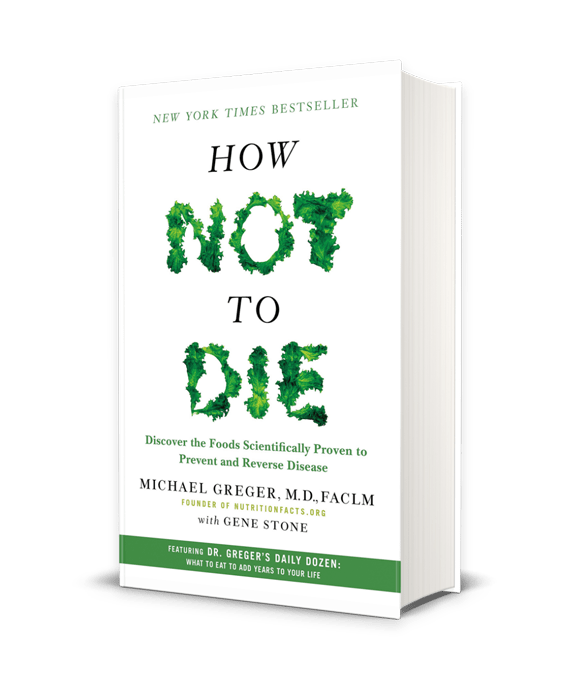
This month’s musings came about after reading the book “How Not to Die by Dr Michael Gregor, which, for those who don’t know, Google Books describes as
“From the physician behind the wildly popular website NutritionFacts.org, How Not to Die reveals the ground-breaking scientific evidence behind the only diet that can prevent and reverse many of the causes of disease-related death.”
https://nutritionfacts.org/book/how-not-to-die/
This ongoing learning about plant-based eating sharpened my thoughts on three key reasons to maintain a whole-food plant-based diet.
- Environmental Health – Climate Change and Ecological Sustainability.
- Animal Welfare – I love animals and don’t want to partake in the torture and mutilation of animals for my sensory pleasure.
- Physical Health – The evidence shows that eating animal-based products is bad for our bodies.
So why start this post about my role at the Eco Trust? Well, primarily, we are an organisation that advocates for and supports people’s efforts to be more sustainable and healthy.
The more I learned about the leading cause of environmental and ecological destruction—animal agriculture—the more I wondered what we/I could do about that.
It led me, as noted, to transition to a whole-food plant-based diet. But what about the organisations I’m part of?
Well, one thing they can do is sign the plant-based treaty and advocate for the transition to a Plant-Based Diet.
This post is intended to reach out to the stakeholders at the Glasgow Eco Trust, my local authority, Glasgow City Council, and my workplace, the University of Glasgow, about why we urgently need to adopt the Plant-Based Treaty and shift ourselves personally to a plant-based diet for our own health and our planet.
Watch this video from the Eat Lancet Commission to finish my intro and give some more context.
Part 1 The Plant-Based Treaty and the Big Picture
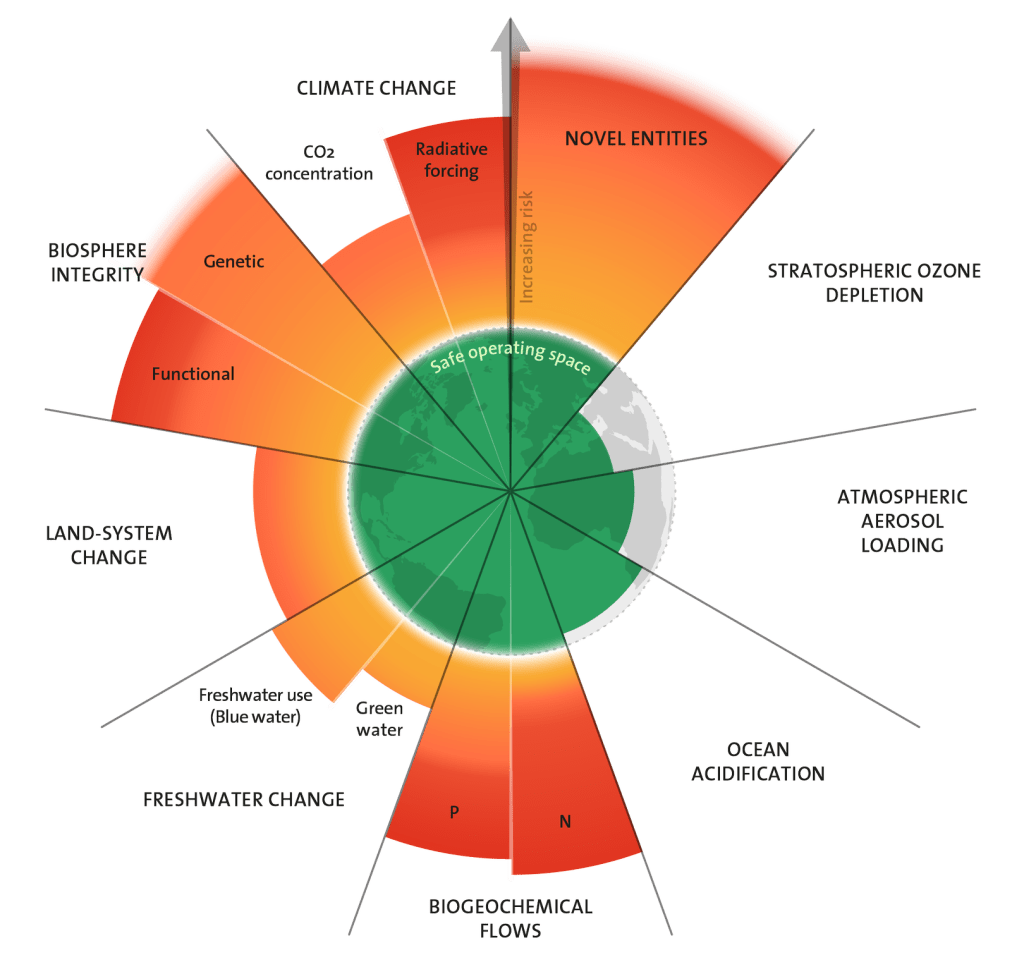
So, what is the PBT – it is a global initiative inspired by the renowned Doughnut Economics model by Kate Raworth and the planetary boundary framework led by Johan Rockström. This treaty aims to guide us towards more sustainable living by advocating for a shift in our global food systems—away from destructive animal agriculture and towards plant-based diets.
Is the Plant-Based Treaty Necessary?
Yes – Climate change is upon us. Not all of us are dumb billionaires or even very wealthy enough to shelter us from the impacts of climate change. So, if you have kids or grandkids, get your act together. Pronto.
The need for the Plant-Based Treaty is rooted in alarming scientific evidence.
According to the “Safe and Just” report, the global food system is the biggest contributor to greenhouse gas emissions, accounting for over a third of the worldwide total. Even more concerning, animal agriculture alone is responsible for 58% of these emissions despite only providing 18% of the world’s calories.
This imbalance highlights the inefficiency and environmental cost of our current food system.
The report also underscores the role of food production in breaching five of the nine planetary boundaries, including
- climate change
- biodiversity loss
- land-system change
- freshwater use
- nitrogen and phosphorus cycles.
These boundaries are critical thresholds that, if crossed, could lead to irreversible environmental damage. The ongoing expansion of animal agriculture is pushing us closer to these tipping points, threatening the stability of our planet and the future of all life on Earth.?
A Rounded Approach to Sustainability
The Plant-Based Treaty advocates for a detailed, joined-up food production approach. This includes reducing greenhouse gas emissions, restoring ecosystems, improving food security, and ensuring social justice.
By shifting to a plant-based food system, we can free up 75% of agricultural land currently used for livestock, allowing for rewilding and reforestation, essential for carbon sequestration and biodiversity conservation.
Moreover, the treaty emphasises the interconnectedness of human and ecological systems. It calls for protecting Indigenous rights, ending live animal exports, and promoting food justice—all important for building a fair and sustainable food system.
The holistic nature of the Plant-Based Treaty ensures that it addresses the root causes of environmental degradation rather than just treating the symptoms….So why not?
Part 2 – Debunking the Myths: Land Use, Livestock, and Scotland’s Potential for Sustainable Change
How The Animal Agri Business Pushes Back against the PBT
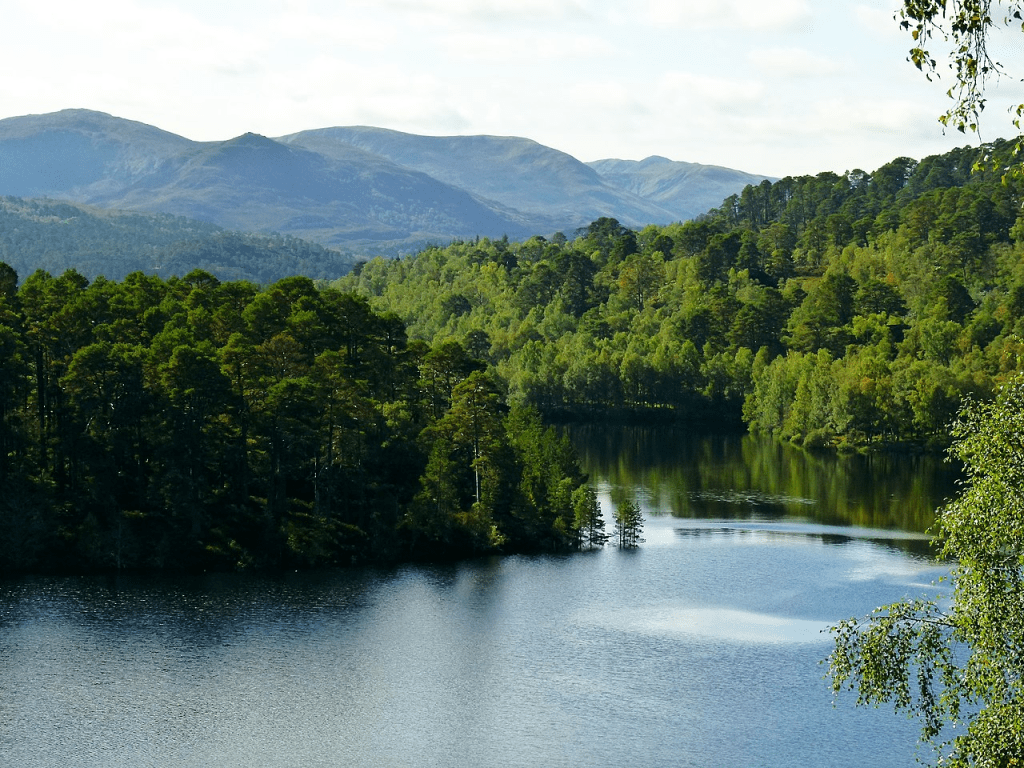
So the first cry I heard when discussing adopting the Plant Based Treaty…..Animal Agriculture zealots.
One of the most common arguments in discussions about adopting the Plant-Based Treaty, centres around Scotland’s perceived reliance on animal agriculture.
The narrative goes something like this: Scotland’s land is barren, scarred by centuries of livestock use (ironic), and only good for animals, animal feed, and a few other crops. However, this narrow view is rooted in outdated practices rather than modern environmental science and sustainable land management.
The Argument: Think Local, Ignore Global
The idea of “Think Global, Act Local” was a popular catchphrase when I studied Environmental Geography in the early 2000s. It made sense then, as it does now, to consider the global context when making local decisions because what we do as individuals adds to significant impacts.
Sadly this has translated into micro-consumer bull shit like plastic straws rather than addressing industrial-scale destruction. Which is coming home to roost through our depleted rivers, soils, and extreme weather.
In Scotland, the animal agriculture industry has twisted this phrase to argue that global environmental data should be disregarded in favour of a localised view that supposedly justifies continued livestock farming. They claim that Scotland’s ecosystems and production methods are finely adapted to our soils and landscapes, and any move away from livestock would be detrimental. But is this really the case?
The Reality: Scotland’s Land Use
Let’s examine this argument using 2018-2023 Scottish Agricultural Census Results and see the two images to give you a snapshot.
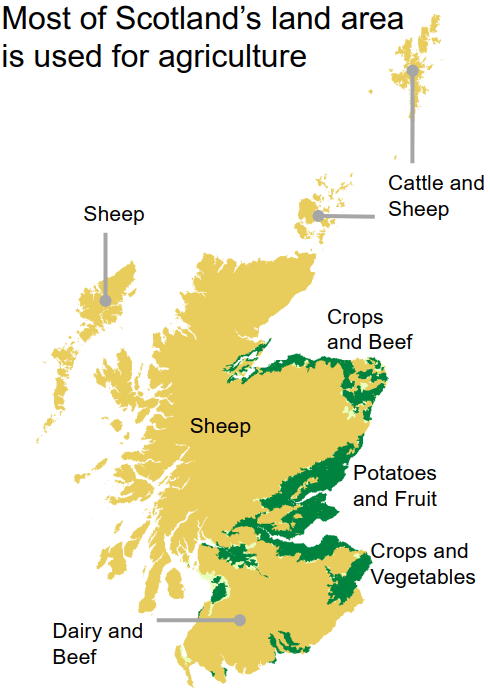
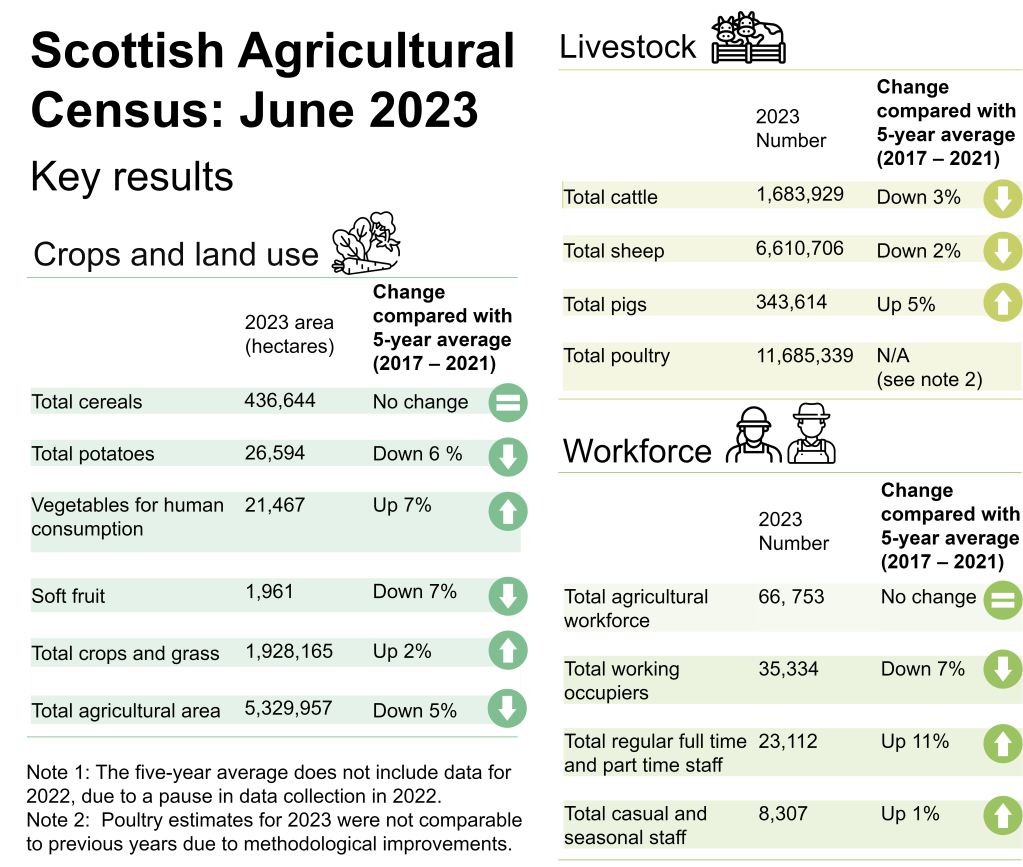
Scotland’s land is predominantly used for agriculture, with an estimated 80%—roughly 5.3 million hectares—dedicated to this purpose. However, much of this land is classified as a “Less-Favoured Area” (LFA), meaning it’s naturally disadvantaged and difficult to farm.
Due to these poor soil conditions, most of Scotland’s agricultural land is used for livestock grazing, with over 3.6 million hectares designated rough or common grazing land and an additional 1.3 million hectares as grassland. Only a small portion—574,000 hectares—is used for crops or fallow.
The Opportunity: Rewilding and Afforestation
While a chunky portion of Scottish land is classified as grass or rough grazing, this doesn’t mean it must remain dedicated to livestock farming. More sustainable and environmentally beneficial alternatives exist, such as rewilding or afforestation, which could repurpose much of this land to offer substantial environmental benefits.
The Knepp Wildland Carbon Project has demonstrated that rewilded areas and forests sequester significantly more carbon than grasslands used for grazing. These rewilded ecosystems also support higher biodiversity, restore natural habitats, improve water cycles, and create more resilient landscapes.
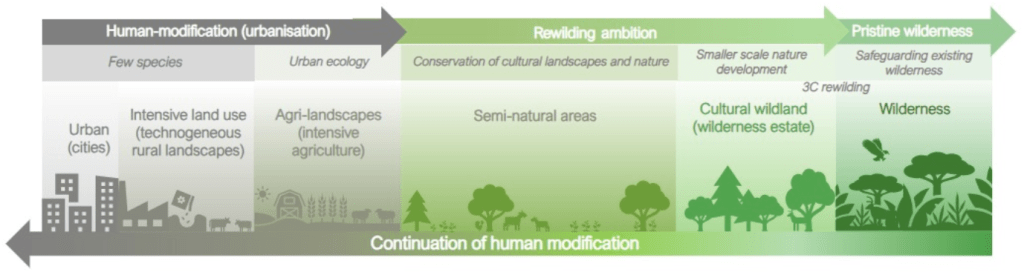
In contrast, the carbon sequestration potential of grasslands used for livestock is minimal. It is often exaggerated as a tactic to delay meaningful climate action.
Moreover, regenerative agriculture—a term often used by the livestock industry to suggest sustainability—doesn’t live up to the climate hype compared to the substantial benefits of rewilding and afforestation. These practices offer a more effective, long-term solution for reducing greenhouse gases and preserving Scotland’s natural heritage.
Addressing the Self Sufficiency Myth and the use of Soy
The meat industry often claims that Scotland’s land is uniquely suited to livestock and that switching to plant-based systems would be impractical.
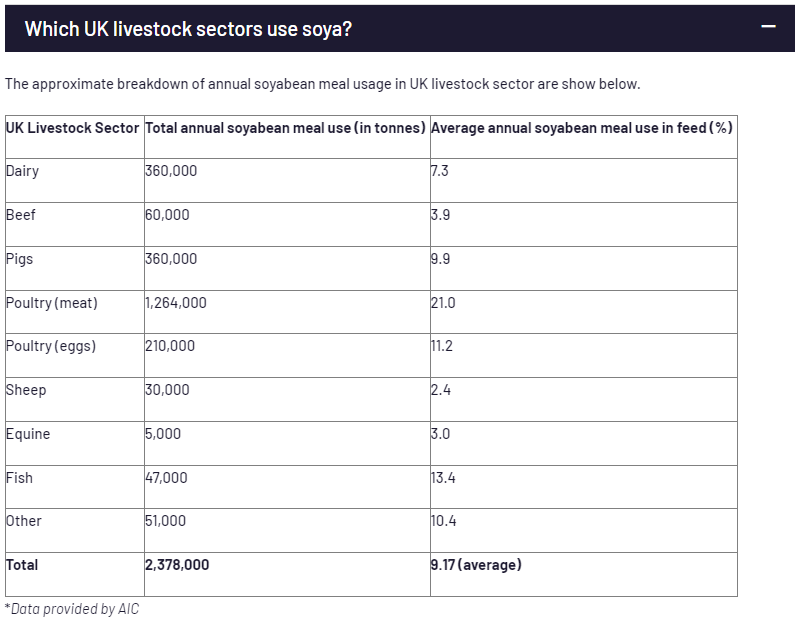
However, relying on livestock farming also necessitates importing soy for animal feed, contributing to global environmental degradation. The Agricultural Industries Confederation (AIC) figures shown below, reflect the volumes of soybean meal imported for use in UK livestock feeds, highlighting that the industry’s needs far exceed domestic capacity, exacerbating the environmental impact.
To End Part 2
The argument that Scotland’s land is only suitable for livestock grazing is short-sighted. It ignores the potential for rewilding and afforestation to restore ecosystems, enhance biodiversity, and significantly sequester more carbon. The continued reliance on livestock farming, which also necessitates the importation of Soy, further exacerbates environmental degradation.
By welcoming more sustainable land use practices, Scotland can lead global efforts to combat climate change and preserve its natural heritage for future generations. The choice is clear: We can either cling to outdated practices or move forward with solutions that benefit our environment and economy.
Part 3: We are what we eat…. won’t someone think of the children!
As I mentioned in my introduction, I initially intended to delve into the health benefits of a plant-based diet.
However, this debate has been exhausted in countless discussions and forums. The constant back-and-forth has led to decision fatigue, food fatigue, and diet fatigue.
So, I’m going to keep things simple.
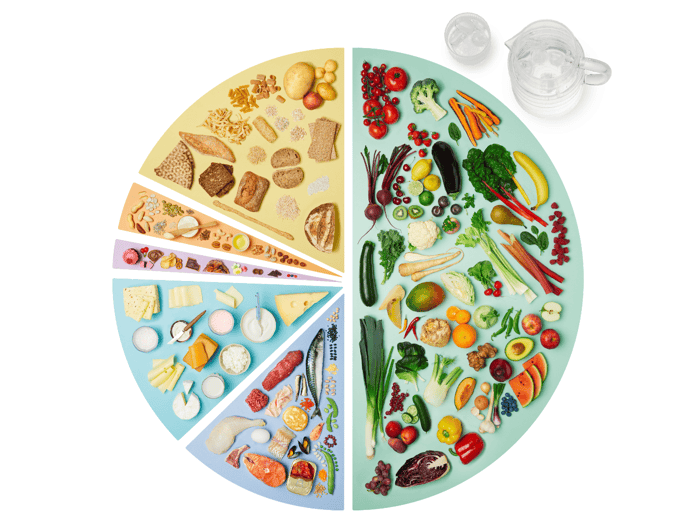
Instead of pushing for labels like vegetarian or vegan, I, like Dr. Michael Greger, advocate for a Whole-Food, Plant-Based Diet. This isn’t about not eating stuff; it’s about what we should eat—focusing on what makes us healthy.
In my house, my wife and I care about animals, the environment, and long-term health. We know what we eat matters. We aren’t perfect, but don’t let that be the enemy of good, or at least trying to be better.
However, I recognise that for many, the main concerns aren’t these things and might not even be about health, but simply what you can afford, what is available, what is quick and what you can just be bothered with.
Which is okay from time to time.
It is about what we do most of the time that matters.
Addressing the Meat Industry’s Misinformation
In advocating the Plant-Based Treaty (PBT), the animal agriculture industry has pushed back, spreading misinformation, particularly targeting parents with claims about the supposed necessity of animal products for children’s development. I’ve witnessed this confusion first-hand, with parents unsure about nutrients like iron, calcium, and protein.
Let’s clear up this confusion. No credible nutrition or health organisation globally advises against eating fruits and vegetables.
On the contrary, they universally recommend limiting foods that raise blood pressure, cholesterol, and the risk of chronic diseases—foods predominantly linked to the meat and dairy industries.
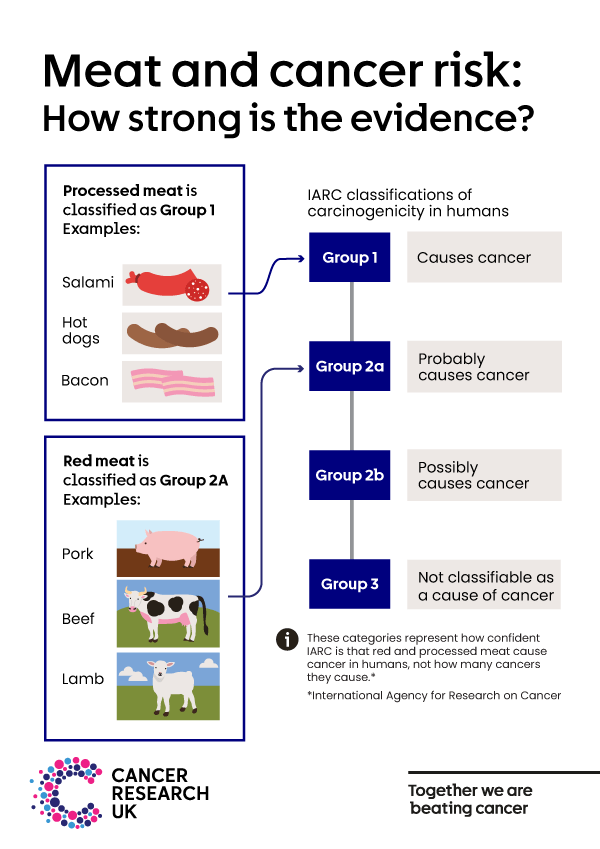
For instance, processed meats like bacon and sausages are classified as carcinogenic by the World Health Organization and other non processed are still classified but not quite as bad. See the graphic below from Cancer Research.
I will bet my house, supermarkets will not be labelling or mentioning that, and instead will be intensely trying to hook you and your kids to junk.
The Truth About Nutrient Needs
Animal Agriculture lobbyists claim that animal products are essential for children’s growth and development, providing vital nutrients like amino acids, vitamins, and minerals that they assert are lacking in plant-based diets.
This claim is not only misleading but potentially harmful. Here are the three classics I get all the time.
- Protein and Amino Acids: It is a myth that only animal products provide essential amino acids. Whole plant foods like beans, lentils, quinoa, and tofu contain all the essential amino acids for healthy growth and development. The British Dietetic Association (BDA) confirms that well-planned plant-based diets are nutritionally adequate for all life stages, including childhood and adolescence. https://www.bda.uk.com/resource/vegetarian-vegan-plant-based-diet.html
- Omega-3 Fatty Acids: Concerns about omega-3s are often mentioned by those promoting animal products, especially fish. However, plant sources like flaxseeds, chia seeds, hemp seeds, and walnuts provide ALA (alpha-linolenic acid), which the body converts for brain development and heart health. The EAT-Lancet Commission also supports the adequacy of plant-based diets in providing sufficient omega-3s without the health risks associated with fish and other animal products. https://eatforum.org/eat-lancet-commission/the-planetary-health-diet-and-you/
- Vitamins and Minerals: While animal products contain vitamins like B12 and minerals like iron and zinc, these can be easily obtained from fortified foods and supplements or absorbed more efficiently from plant-based sources when paired with the right foods (such as vitamin C-rich foods with plant-based iron sources). The World Health Organization, NutritionFacts.org, and the NHS all support the adequacy of plant-based diets in meeting these nutritional requirements without the associated health risks of animal products. https://nutritionfacts.org/optimum-nutrient-recommendations/
The irony is that if meat were truly as nutritionally perfect as claimed, there wouldn’t be such a thriving market for supplements targeting those who consume animal products. The very existence of products like protein shakes and snake oil salesmen punting Huel for meat-eaters highlights gaps in their diets.
The Real Danger: Ultra-Processed Foods
The meat industry often warns against “ultra-processed” plant-based foods like veggie burgers, suggesting they are unhealthy.
While it’s true that processed foods should be avoided, this argument is a red herring.
A Whole-Food, Plant-Based Diet emphasises whole grains, fruits, vegetables, legumes, and nuts, far from the ultra-processed foods they describe.
If the meat industry were genuinely concerned about public health, it would focus on the chronic diseases linked to its products, which are high in saturated fats and cholesterol.
The obesity epidemic isn’t driven by an overconsumption of plant-based products like falafels and mushroom burgers, but by a diet heavy in processed meats, dairy and sugary foods.
The Impact on Children’s Health
The meat industry’s professed concern for children’s health is particularly ironic given the rising rates of childhood obesity, type 2 diabetes, and heart disease—conditions closely linked to diets high in processed meats, dairy, and sugary foods.
Studies consistently show that children raised on plant-based diets have healthier body weights, better cardiovascular health, and lower risks of developing chronic diseases later in life.
Teaching children to appreciate and enjoy whole, plant-based foods benefits their health. It sets them up for a lifetime of healthier eating habits.
Last words on this point
So, while the Animal Agriculture industry might claim that animal products are indispensable for children’s growth and development, the evidence clearly tells a different story.
A Whole-Food, Plant-Based Diet not only meets the nutritional needs of children and adolescents but also avoids the health risks associated with animal products.
It’s time to stop believing the scare tactics and focus on what truly nourishes our bodies and our children’s futures.
We are what we eat, and it’s time to choose health, sustainability, and compassion. Here is a video from Anne Bean on how she got her family on the Veggies.
Conclusion
To conclude, I wanted to make an indisputable argument for the plant-based treaty.
In preparing the argument I came into the road blocks that the Meat and Dairy industry and its various fan boys would jump down my throat and have a bunch of cookie cutter arguments.
So rather than just focus on the positives of being plant based, I took the typical arguments I get and tried to address them.
What did I find when researching to advocate for the PBT, that the overwhelming evidence for people, planet and animals favours a plant-based transition.
The environmental benefits of reducing reliance on animal agriculture range from significantly lowering greenhouse gas emissions to enhancing biodiversity and carbon sequestration through rewilding and afforestation.
Scotland has the potential to lead the way in sustainable land management, taking ecologically uplands and productive arable land currently used for livestock and transforming it into thriving ecosystems that contribute positively to our global climate goals.
Nutritionally, the idea that animal products are indispensable for health is not supported by credible science as discussed.
Going forward, it is crucial that decisions made by local and national government and local organisations such as the Eco Trust and Glasgow City Council are based on sound science and a commitment to sustainability rather than on the outdated and self-serving arguments of industry groups.
By adopting the Plant-Based Treaty, we not only protect our environment but also ensure a healthier future for our children, who deserve to grow up in a world where their food choices contribute to, rather than detract from, their health and the health of the planet.
It’s time to move beyond the rhetoric and embrace a future where what we eat reflects our values of sustainability, compassion, and well-being.
The evidence is clear, the path forward is evident, and the time for change is now. Let’s make Scotland a leader in this global movement towards a healthier, more sustainable food system.
Read More: Scotland’s Path to Sustainable Change: The Case for Plant-Based Treaty Adoption- https://eatforum.org/
- https://drawdown.org/
- https://vegconomist.com/health/norway-recommend-plants-dietary-guidelines/#:~:text=Norway%20has%20published%20updated%20dietary,should%20be%20eaten%20each%20day.
- https://www.greenqueen.com.hk/big-meat-and-dairy-lobbying-tactics-misinformation-policy-industry/
- https://www.feedthemplants.com/
- https://www.pcrm.org/
- https://changingmarkets.org/
- https://www.forksoverknives.com/
- https://www.straightupfood.com/blog/
- https://www.happyhealthylonglife.com/happy_healthy_long_life/



 Horizon Glasgow
Leave a comment