
Glasgow declared a housing emergency. Yet planning objections about parking are still blocking new homes. Henry Grabar’s Paved Paradise explains why, and what has to change.
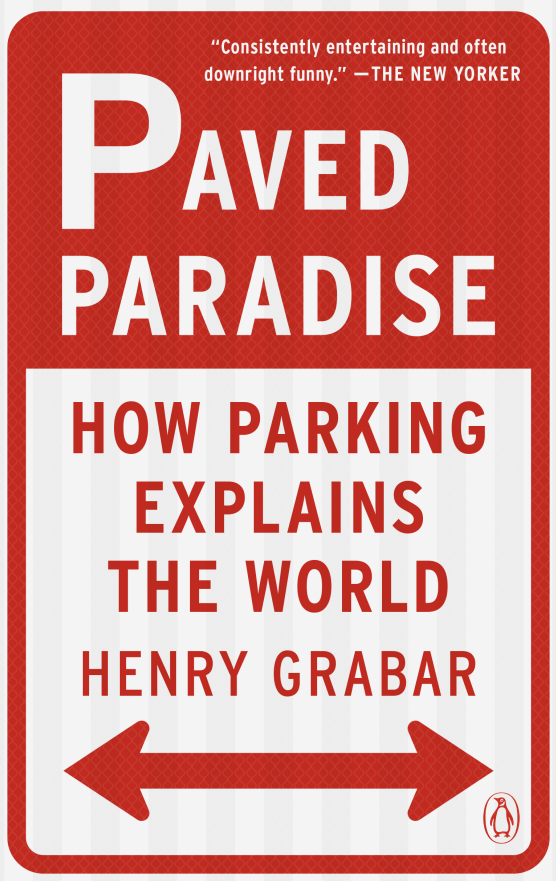
I’ve just finished reading Paved Paradise: How Parking Explains the World by Henry Grabar and if you’ve bumped into me since my wife bought me this book, you’ll already have heard my ramblings about how good it is.
Here’s the short version. Grabar is a Slate journalist who spent years investigating how parking, yes, parking, shapes the cost of housing, the look of our cities, and whether new homes get built at all. His book is rooted in America, but his argument stands with relative ease on Glasgow’s doorstep.
Right now, in a city that has declared a housing emergency, where over 10,000 children across Scotland are growing up in temporary accommodation, we are still allowing planning objections about car storage to block the homes those families desperately need.
How did I end up reading it? A past project brought me to Edinburgh Airport as project manager for a new car park management system, so the subject already had my attention. My good lady knew I was into urbanism, so this seemed like a no-brainer gift.
I was also exhausted by every Glasgow Live and Glasgow Times article treating parking as the city’s defining crisis every time an event, a building, or a street improvement was proposed. Only The Bell seemed willing to discuss it with any nuance. This blog post is my attempt to connect Grabar’s argument to what is actually happening in Glasgow right now.
How Parking Controls Glasgow’s Built Environment
Grabar’s central idea is surprisingly simple. As he puts it: ”Parking is the primary determinant of the way the place where you live looks, feels and functions“. Every new building project starts not with how many people it can house, but with how many cars it can store. Architects and developers will tell you the first thing they figure out is how many parking spaces they can fit on the site. The parking comes first. The people come second.
In the US, there are at least three parking spaces for every single car, a figure rooted in decades of research by urbanist Donald Shoup, whose work Grabar draws on heavily. The national parking stock is never more than a third full. And the average car? It sits parked for 23 hours a day. That last figure isn’t just an American observation, it’s in Glasgow City Council’s own Transport Strategy (2022). The council knows this. It’s in their documents. And yet, the reflexive response to any new development remains: where will people park?
The stakes here are higher than inconvenience or aesthetics. A 2024 study led by researchers at the University of Edinburgh found that the global system of motoring, the infrastructure, the culture, the land it demands is implicated in 1 in 34 deaths worldwide. We have built cities around a system that is, by any measure, extraordinarily costly in human terms. And we are still mandating more of it.
I should be clear about something because it comes up every time I talk about this. Like Grabar, I am not anti-car. I’ve had to say this more times than I can count to people who assume anyone questioning motoring policy and is advocating for walking, wheeling, and cycling must be a militant cyclist. A militant cyclist who, for the record, has driven Route 66 west to east and then back across America east to west.
Driving is fun. It’s useful. It’s sometimes genuinely essential. But when everybody expects to drive everywhere and park for free exactly where they’re going, you run into a situation where there simply isn’t enough space. The solutions we’ve tried for 70 years, build more parking, demolish more buildings, have made things worse, not better. As Grabar puts it: “parking lots ate away at the city like moths devouring a lace gown.”

Look at the image above. That’s Houston, Texas, photographed by Alex MacLean for GEO magazine. Those pale rectangles between the skyscrapers aren’t parks, plazas, or housing. They’re car storage. Valuable city-centre land, sitting empty for 23 hours a day, waiting for a car that isn’t there yet.
Glasgow isn’t Houston. But for many people, the logic is the same.
The Hidden Cost: Parking Adds Thousands to Every Glasgow Rent and Mortgage
Here is the number that should concern every Glaswegian: parking doesn’t just take up space. It gets paid for. By you, whether you own a car or not.
A Seattle study cited in Paved Paradise found that across 23 developments, landlords were losing an average of £246 per flat per month on parking provision, losses passed directly to tenants through higher rents. Car-free tenants paid the same as everyone else. The parking bill was simply built into the lease. A 2013 Sightline Institute analysis of the same data found that parking costs were adding between 3% and 42% to rents, depending on the development, averaging around 15%. Grabar puts it plainly in his C-SPAN interview: parking adds “10, 20, 30 percent” to the cost of housing.
In California and Arizona, structured parking adds around $70,000 onto the cost of every new affordable housing unit, a figure Grabar documents from developers themselves. A space for a car costs more to build than a room for a person.
Under GCC’s SG11 Sustainable Transport Supplementary Guidance (2017), new mainstream housing must provide one parking space per home for residents, plus 0.25 spaces per home for visitors, a combined minimum of 125% parking provision.
Picture a typical Glasgow tenement block: four storeys, two flats per landing. A single close gives you 8 homes. Under SG11, that already requires 10 parking spaces. A modest terrace of three closes, 24 homes, requires 30 spaces. Four closes, 32 homes: 40 mandatory parking spaces before a single planning application can succeed. Not extra homes. Not a back green. Not a play street. Car storage, mandated by the same council that has declared a housing emergency.
The academic evidence on what this requirement does is unambiguous. A peer-reviewed review of parking management policies across European cities found that minimum parking requirements “reliably increase both car ownership and car use, while also increasing construction costs that are passed directly to residents in higher rents, whether they own a car or not” (Kirschner & Lanzendorf, 2020). The researchers cited urbanist Herbert Knoflacher’s conclusion directly: “Private parking places are destroying the living space of cities.”
Parking Regulation and Management (Albalate & Gragera, 2021) reinforces this: minimum off-street requirements “lead to an oversupply of parking and higher construction costs for housing, higher levels of car ownership and higher car use, all leading to inefficient and unsustainable outcomes.”
Here is the retrospective test worth applying. Go and look at the streets of Anniesland, Partick, Dennistoun, or Shawlands. The tenement blocks that define Glasgow’s built character, the ones residents consistently say make the city liveable and worth living in, would fail GCC’s current parking standards. They would not be approved today. The density, the street frontage, the ground-floor use, none of it accommodates 125% parking provision. If we applied today’s rules to yesterday’s city, Glasgow as we know it would not exist.
That is not a hypothetical argument. It is a description of exactly what is being prevented from being built right now.
Glasgow’s Contradiction: A Housing Emergency Where Cars Come First
Glasgow City Council declared a housing emergency in November 2023. The Scottish Parliament followed with a national declaration in May 2024. By September 2025, there were 10,480 children living in temporary accommodation across Scotland, a record high. Shelter Scotland‘s director called it a problem “decades in the making.”
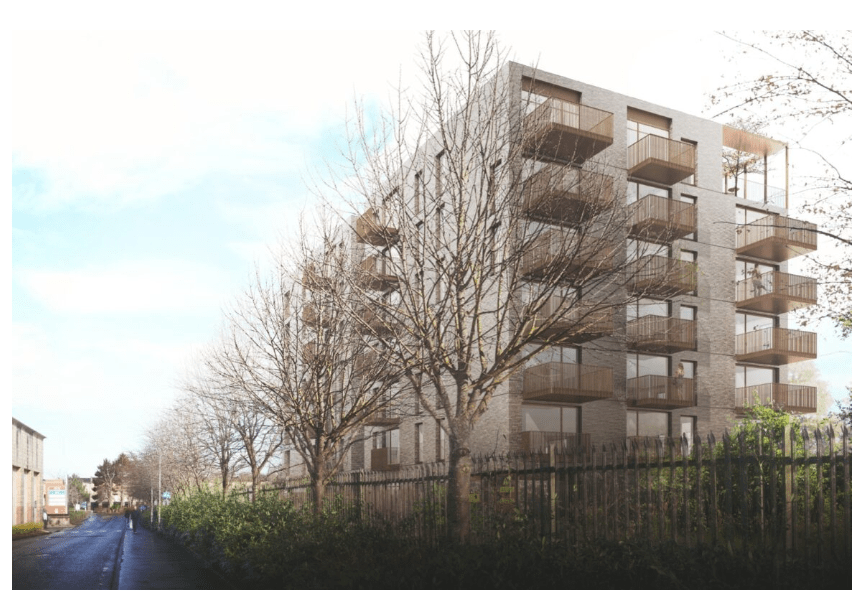
I live locally. The gap site at 21 Herschell Street in Anniesland has sat empty since 2021, when the Department of Work and Pensions vacated the office block, and it was demolished. Iterations of plans came and went. Planning was finally approved in 2024.
The approved scheme, developed by Mac Mic Group is for 113 build-to-rent flats on a brownfield site next to Anniesland train station. Exactly the kind of development Glasgow says it needs: brownfield, sustainable, close to rail, bus, and local amenities. The developer was explicit that the scheme was designed to “encourage residential footfall without increasing car traffic.” Parking provision? Car club spaces and charging points. Not the 154 spaces SG11 would traditionally demand.
The objections that nearly stopped it poured in. Almost all centred on parking.
You can read the full objections on the GCC planning portal application reference 23/00769/FUL. Here is a representative sample:
“The provision for parking is totally inadequate and goes against the guidance laid out by the City Council.”
“Not providing adequate parking is an unacceptable strain to put upon the local community. The development should not go ahead unless this is rectified.”
“28 spaces for 123 flats is simply not even close to enough.”
One objector calculated that 28 spaces represented just 31% of the SG11 requirement, a “shortfall of 126 spaces.” In other words, residents were demanding that the developer provide more car storage spaces than homes. In a city in a housing emergency. On a brownfield site. Next to a train station and an arterial bus route.
The application was revised down from 123 units to 113 in the process. Ten homes, gone. And as of August 2025, the consented site has been put up for sale by Mac Mic Group, with Savills noting that Glasgow is “ranked first in the UK for rental yields and house price growth” and has a “marked undersupply of operational BTR schemes.” The demand is there. The site is consented. It just needs someone willing to build it.
The Herschell Street Case: 123 Homes Blocked by Parking Objections, why this and what to do with it?
Reading those objections after reading Grabar’s book is an uncanny experience. It is as if the residents had been handed a script written in Houston, Texas.
One objector wrote that “people cannot be expected to confine themselves to only moving within areas accessible by foot or by public transport. Many people in Anniesland require use of a car to provide care to family living elsewhere, to access employment and to enjoy rural Scotland.”
Another dismissed the developer’s own reasoning directly: “The response that because it is close to public transport links and local amenities, and therefore a low number of spaces will be provided, is not really a suitable answer. People use cars for more than their weekly shop and commuting to work and back.” He then added: “These flats are meant for private rental, are the future landlords of the development going to refuse prospective tenants if they own a car? Highly unlikely.”
Another complained that Anniesland was “not exactly the new Finnieston where there would be no need for a car. Poundland, Marie Curie, 2 tanning salons, a bookies and a Morrison’s? Hardly a utopia that residents would never wish to leave.” Her proposed solution? “Build a multi-storey car park, buy out the Morrison’s car park to provide free 24/7 parking. After this, we will happily welcome new residents to the area.”
In other words: we’ll accept new neighbours, but only after you’ve built them a palace for their cars.
Grabar describes this exact dynamic in city after city across America. “People view new neighbours as coming in 2,000-pound steel packages,” he says. “They perceive them as a threat to their right to curb parking.” It is not really about parking at all. It is about who has the right to live in the neighbourhood.
The Three Supporters at Herschell Street (One of Them Was Me)
I should be transparent here. I didn’t just read about this planning application after the fact. I submitted a comment in support. I live nearby, the site. So when I see valuable land going to waste, a housing crisis and people moaning about lack of parking to block housing, it is very frustrating and personal.
There were three of us in support. Three, against dozens of objections.
One resident, did the maths the objectors refused to do:
“To provide the recommended 125% would require as much surface parking as is currently provided to the adjacent Lidl, Gym, and Costa combined, or a very expensive and resource-intensive multi-storey car park. I do not think this would be a good use of space in our local community as both options would be unsightly, contribute to the urban heat island effect and poor drainage, as well as create the very traffic conditions other respondents have raised concerns about.”
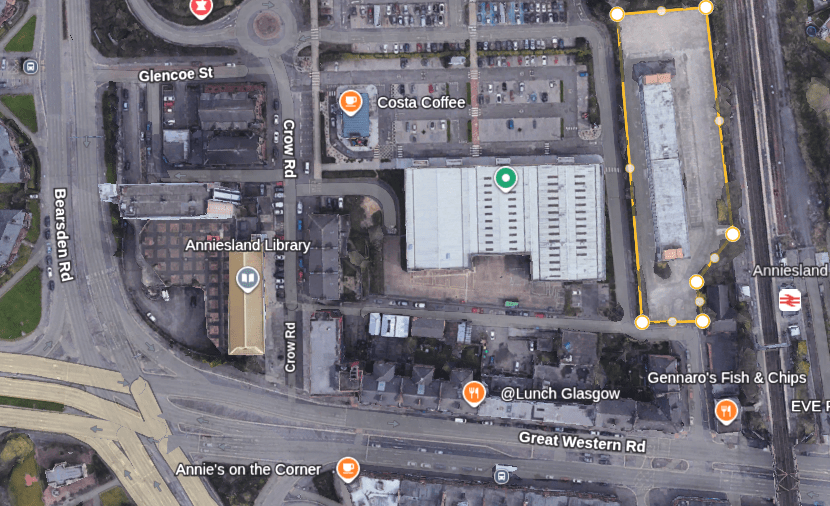
Read that again. Meeting the parking standard would mean building a car park the size of the Lidl, the gym, and the Costa combined. And the objectors were demanding exactly that, or no homes at all.
Chris Ditchfield kept it simple:
“Much needed new housing on a brownfield site, well suited to residential development with easy access to train, bus, taxi, and bike hire stations. Shops on the doorstep. I can’t think of a better site for flats, negating the need to own a car.”
And me? I wrote that the development “directly addresses Glasgow’s housing shortage” and that “a vibrant, compact neighbourhood reduces the need for car dependency, promoting walking, cycling, and public transport use.”
We were outnumbered. Heavily.
Motonormativity: Why We Apply a Double Standard to Cars
So why do otherwise reasonable people demand car storage over homes for families? There is a name for it.
Psychologist Ian Walker at Swansea University calls it motonormativity the idea that we have collectively internalised such deep assumptions about the car that we judge motoring by entirely different standards than we apply to everything else, without even realising we’re doing it.
In a study of 2,157 UK adults, Walker’s team presented identical statements framed differently. When asked whether people shouldn’t smoke in populated areas where others breathe the fumes, 75% agreed. Change “smoke” to “drive” and “cigarette” to “car,” and agreement collapsed to 17%. Same principle, different response. It is not rational. It is a cultural bias so deep that even non-drivers have adopted it.
If you want to see it presented brilliantly, the Global Cycling Network’s Carspiracy is worth twenty minutes of your time.
A 2025 peer-reviewed follow-up by Walker and Marco te Brömmelstroet tested this across the UK, the USA, and the Netherlands. The bias held in all three countries. But it added a second finding that matters just as much: pluralistic ignorance. People don’t just apply double standards to cars. They dramatically underestimate how many others support change. We each assume we’re the odd one out. We’re not.
That goes directly for planning. If most people privately support sustainable development but assume their neighbours don’t, they stay silent. The motonormative minority fills the void. The objections pile up. The homes don’t get built.
The study also found that most people consider it unacceptable to use non-drivers’ taxes to subsidise those who drive. And yet, Glasgow’s planning system does exactly that every time it mandates parking that car-free residents will pay for through their rent.
What Glasgow’s Own Consultation Data Says
This is not a fringe view. Look at Glasgow’s own data.
In GCC’s 2021 Public Conversation on Transport, 76% of nearly 2,800 respondents supported reallocating road space away from private cars. 83% supported liveable neighbourhoods that prioritise people over vehicles. Cycling infrastructure was the single most-requested improvement, with 667 separate mentions.
These are not the views of a radical minority. They are the settled majority opinion of Glaswegians, in their council’s own report.
And yet, that same council’s planning standards still require 125% parking provision for every new development. The Glasgow Active Travel Strategy (2022) acknowledges this system “has led to serious inequalities for the 46% of households in Glasgow who do not have access to a car.” GCC’s own strategy. GCC’s own figure. A self-indictment hiding in plain sight.
The people of Glasgow have already said they want change. The problem is that motonormative thinking drowns out those voices at the exact moment it matters most when a planning application lands and the people who respond are overwhelmingly those who feel their parking is under threat. The 46% without a car do not, as a rule, organise to object. They are the silent majority in every consultation. And the system amplifies the minority with cars over the majority without.
Glasgow City Council vs Glasgow City Council
Glasgow City Council’s Transport Strategy (2022) commits to reducing car kilometres by at least 30% by 2030. It calls for supporting “car-free or low car development where practicable.” It explicitly proposes reviewing parking standards “to discourage car ownership.”
Glasgow City Council’s planning standards SG11, still in force, still being cited by objectors at Herschell Street require 125% parking provision for every new home.
Same council. Same city. Two documents pointing in opposite directions.
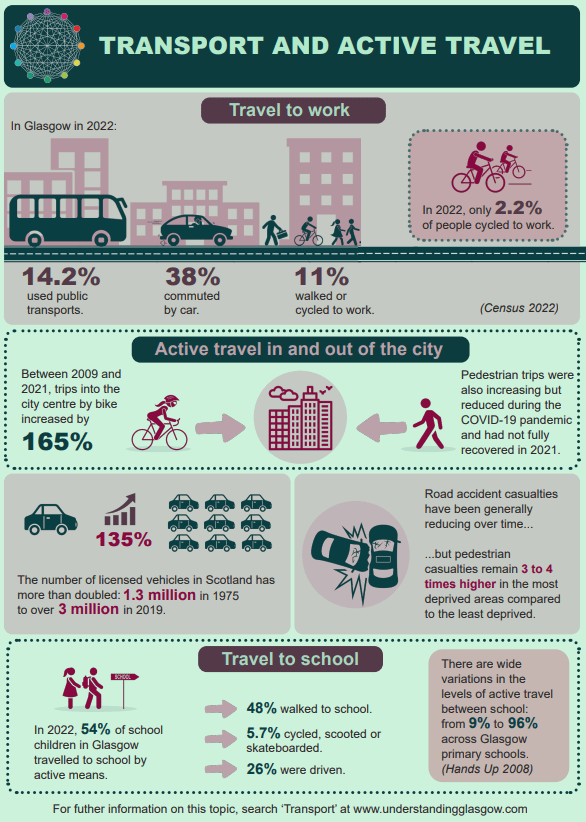
Now add this. 46% of Glasgow households have no car. Not because they’re waiting for a parking space. Not because they haven’t got around to it. Because they don’t own one, can’t afford one, or have chosen not to have one. Nearly half the city. Confirmed by GCC’s own Active Travel Strategy, the Scottish Household Survey, and Understanding Glasgow. Three independent sources. The same number. Every time.
And every new home in this city must still come bundled with a car storage space by law. Paid for by every resident. Including the 46%.
So Glasgow’s transport policy says: build fewer spaces. Glasgow’s planning rules say: build more. Glasgow’s motoring community, armed with those planning rules, turned up to a consultation and demanded more still or no homes at all.
The council is arguing with itself. In writing. In public. And meanwhile, families stay in temporary accommodation, gap sites stay empty, and the car numbers keep going up.
What Parking Reform Would Look Like in Glasgow
So what does the alternative actually look like? It is not theoretical. It has been done, and not in some progressive Scandinavian utopia. In cities dealing with the same pressures Glasgow faces right now.
Abolish Parking Minimums
In 1997, Berlin abolished minimum parking requirements entirely. Development carried on. Homes got built. The city stopped subsidising car ownership through the back door of every planning application.
London followed in 2004. Minimums out, maximums in. Research by Guo and colleagues found parking supply fell by approximately 40% compared to what the old minimums would have required,143,893 fewer spaces between 2004 and 2010. Without losing a single house.
In 2023, Austin, Texas, a car-dependent city if ever there was one. I visited in 2016 and 2018 and realised this. The city voted 8-2 to abolish parking minimums city-wide, becoming the largest US city to do so. The argument was simple: mandating parking raises construction costs, inflates rents, and makes housing unaffordable.
Glasgow’s own SG11 Supplementary Guidance already permits zero-parking developments in accessible locations. It is not illegal. It is not unprecedented. It just rarely happens because objectors make it political, and planners lack the confidence to hold the line.
When 46% of Glasgow households do not own a car, there is no planning rationale for requiring every new development to come preloaded with car storage.
Price On-Street Parking Properly
Abolishing minimums only works if you deal with the overflow. And the overflow in Glasgow is free. Or near enough.
Grabar’s argument in Paved Paradise is blunt: as long as on-street parking is cheap and abundant, there is no incentive for anyone to change their behaviour, driver, developer, or planner. Pricing creates feedback. Free parking distorts everything.
Glasgow’s Transport Strategy 2022 commits to reducing car dominance. Parking pricing is one of the few tools that actually works. The strategy says the right things. The question, as ever, is whether the political will to implement them exists.
Invest in the Alternatives
None of this works without the third part. You cannot price parking, abolish minimums, and leave people with no way to get around. That is not reform, that is punishment.
Glasgow’s Active Travel Strategy 2022–2031 sets out a genuine ambition for cycling and walking infrastructure. The GCC Public Conversation found that 85% of Glaswegians want more investment in cycling. The demand is there. The mandate exists.
Grabar is not anti-car. He is anti-compulsion. When cities give people genuine alternatives, most people will use them. Not all of them. But enough to change the city.
Forty-six per cent of this city does not own a car. That is nearly half of Glasgow being told, every time a planning objection cites parking, that their housing needs matter less than someone else’s parking convenience. Reform is not about taking anything away. It is about stopping the forced subsidy and redirecting it toward homes.
The Uncomfortable Truth
Glasgow has declared a housing emergency. Formally. On the record. More than 10,000 children in Scotland are in temporary accommodation right now. Shelter Scotland describes a system under sustained and worsening pressure.
And at Herschell Street, one specific, documented, real case 123 homes were delayed because residents worried about parking, not even on their street. Just nearby.
These two things cannot both be true at once. Either housing is an emergency, in which case everything that obstructs it gets interrogated and challenged, or it is not an emergency, and we are just using that language because it sounds urgent without actually requiring anything of us.
That is a choice. It is not inevitable. It is not natural. It is a political decision embedded in a planning system that has never been forced to justify its assumptions because nobody asked it to.
Grabar’s book is called Paved Paradise, a nod to Joni Mitchell. We paved paradise once. We are still paving it. We are just doing it more politely now, through planning portals and committee minutes, one objection at a time.
The homes are needed. The land exists. The policy framework permits reform. The only thing missing is the willingness to say, clearly and without apology: parking does not come first.
Homes do!



 Horizon Glasgow
Leave a comment