
The exciting world of the Benefits of Roundabouts: A Dive into Safety, Economics, and Environmental Impact
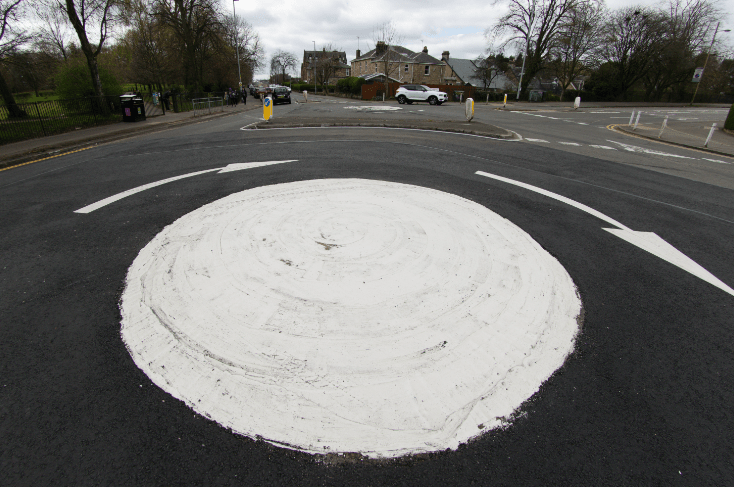
This week my blog post came to me when seeing that Glasgow City Council – responding to Jordanhill community members, was taking away a roundabout at my old High School (St Thomas Aquinas) away to put in traffic lights and like flies to shit, people have started complaining of traffic during the construction, and one thing the temporary lights are demonstrating is, lights don’t help anyone.
This week’s argument is why councils should invest in roundabouts rather than installing traffic lights.
Part 1. Context, history and how do they work?
Context
If, like me and a few others in the UK, you may have lived in a “new town” for a period of your life – for me, it was Erskine – from the age of twelve to eighteen. Moving there, I thought it was strange compared to Glasgow.
The first thing I noticed was all the roundabouts.
Studying Geography in high school, I learned that this is by design and for good reason. A quick history
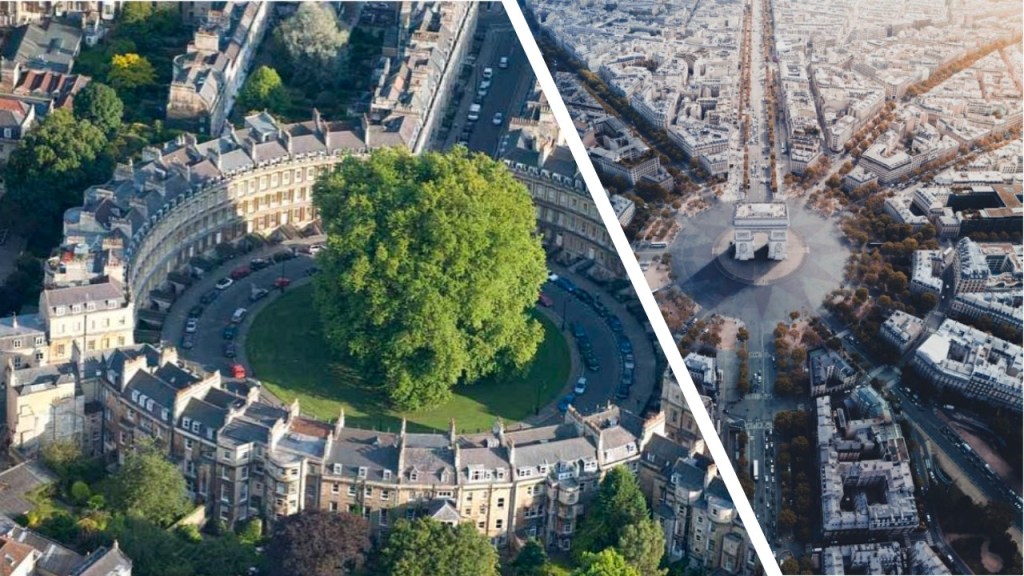
- Having started in 1768, England: The Circus in Bath set the way. The UK now has roughly 25,000 roundabouts, popularised in the new towns set by the standard like Letchworth Gardens.
- Not to be outdone by the British, the French built the Place de l ‘Étoile around the Arc de Triomphe in Paris in 1780, setting the standard for striking fear and inspiration for the roundabout. France now has the most roundabouts in the world, with approximately 30,000.
How do they Work?
The basics can be found in the Highway Code
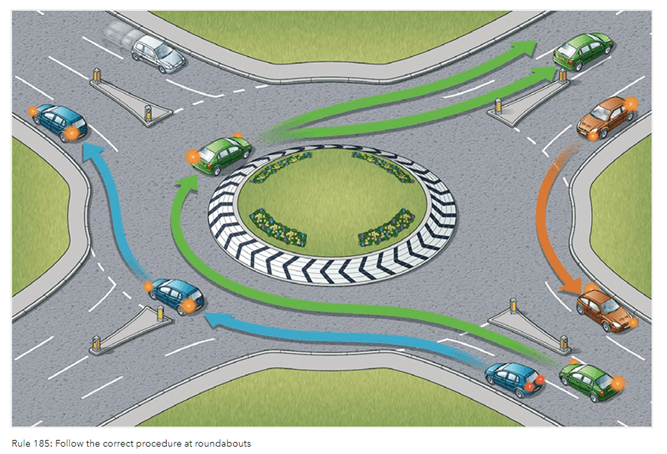
This belter layout – with a must watch on its genius
My observations when living in the new town of Erskine and why I grew fond of the roundabout of how they worked – it might sound daft.
Still, I liked the fact that you didn’t have to sit at red lights, there was random stuff in the middle of roundabouts. The planners had built a series of paths with bridges connecting the different areas of Erskine with each other.
So it kept me from traffic on my bike and walking, when driving, it was easy and quick to get around Erskine.
It is still a driving paradise relative to most places in the west of Scotland.
Unless all the side streets, car parks and amenities become rammed with cars……. another discussion.
Part 2. Safety First
My most important argument. Roundabouts improve road safety.
For this, I had to look at the overall data on crashes at junctions, roundabouts, and overall road traffic incidents from the UK Gov.
This point always shocks me
Headline figures
In the year ending June 2022, there were an estimated:
- 1,760 fatalities in reported road collisions, a 4% decrease compared with year ending June 2019 (that is, pre-pandemic levels)
- 29,804 reported killed and seriously injured (KSI) casualties, a decrease of 6% compared with the year ending June 2019
- 137,013 reported casualties of all severities, a decrease of 12% compared with the year ending June 2019
On the surface, this seems like good information, but there are changes in terminology, definitions and methodology. Up until 2019, the UK Gov used to provide really great summary reports,
However, since then, people can extract raw data more easily from the government, but the summary sheets, analysis and headline data were much easier to consume for the general public.
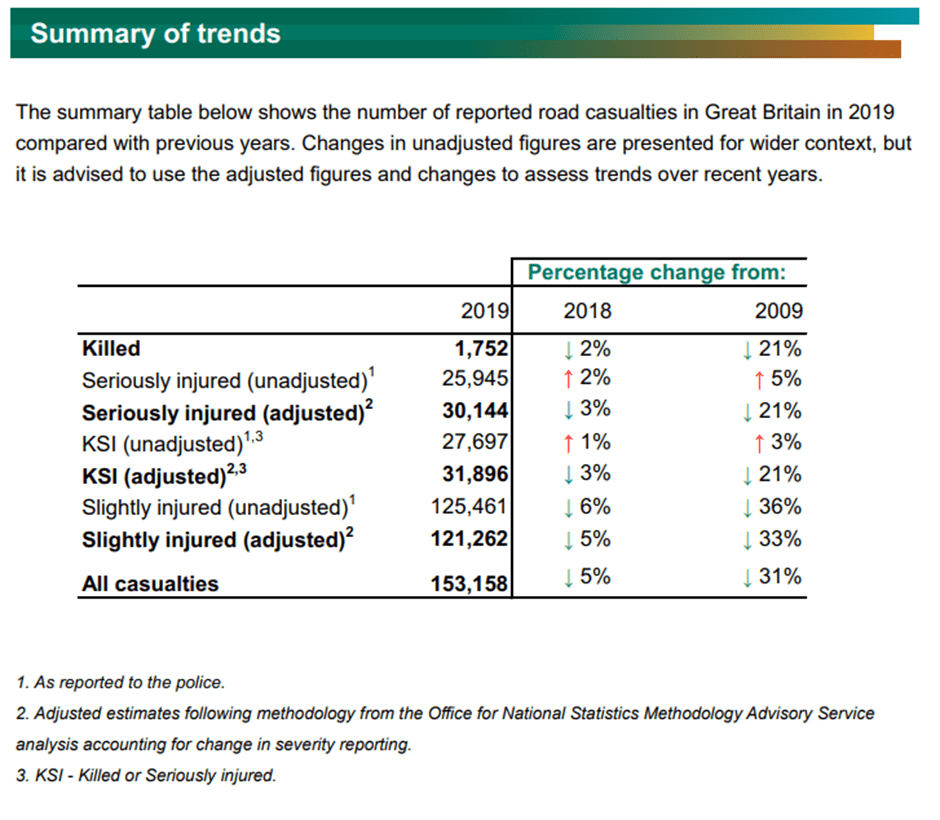
In this crop of the 2019 report – linked. Do you notice any contradictions. Well people killed is 1,752 while in the 2022 figures it states 1,760 fatalities a decrease of 4% on 2019 figures. So, unless adding 8 is a new way of decreasing by 4% I’m confused. So, thinking of these figures it is shocking.
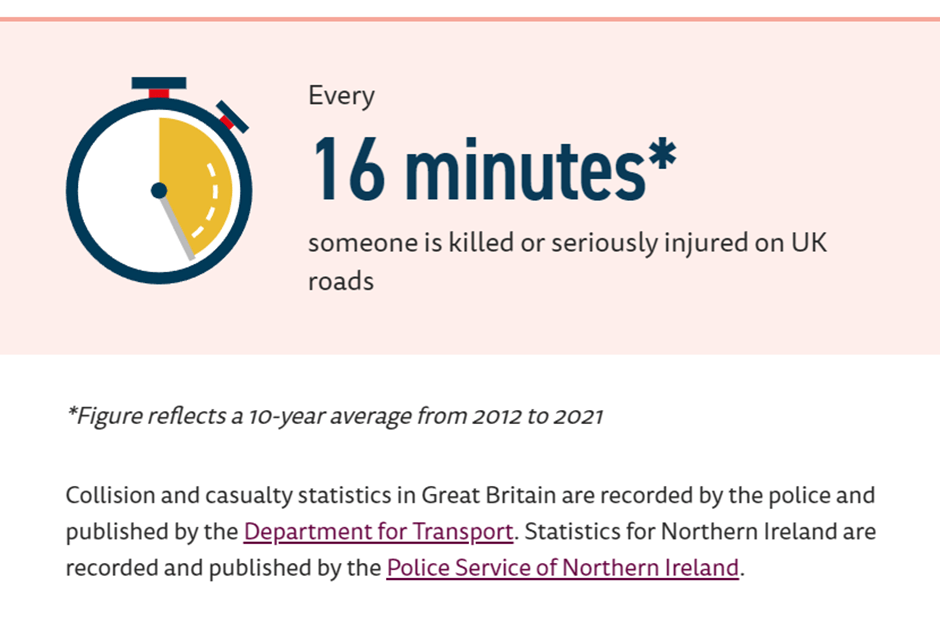
Why do we accept that? Just imagine the outcry if those figures were attributed to any other person or group directly killing and injuring folk? We have invaded other countries for less.
So why is this important to roundabouts.
Fortunately, other exciting characters look at these things. Some actual experts do this for a living.
Effects on Road Safety of Converting Intersections to Roundabouts: Review of Evidence from Non-U.S. Studies was a meta study. So, what that means – Twenty-eight studies that provided over 100 evaluations of the effects of changing from standard junctions to roundabouts found that because roundabouts typically reduce the number of conflict points compared to traditional junctions, the number of severe crashes, especially right-angle and head-on collisions.
This results in a significant 30% to 50% reduction in injury accidents. Fatal accidents are reduced by 50% to 70%.
So, how does this fit into road traffic? In their review of Vision Zero, the Economist reports junctions account for around 3/4 of all road deaths and serious injuries in Great Britain.
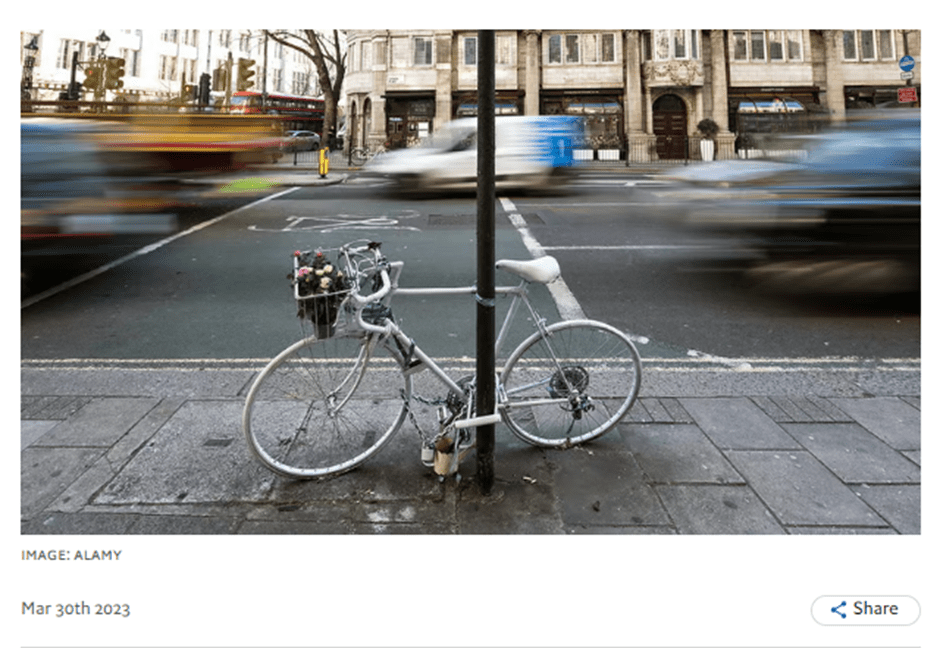
So, in short, if you want to impact the mass killing of people on our roads, embrace the roundabout.
For all users of the street, the roundabout helps. It reduces car speeds on approach; when appropriately designed, the approaches can facilitate safe and easy crossing for cyclists and pedestrians.
See this short video for happy roundabouting –
Part 3. They are cheaper to build and maintain and can save councils money
Let’s break this down firstly, construction.
What do I know about the costs of road engineering? Well, I worked for an Engineering company, and one task was to capture and analyse council spending with a specific focus on road maintenance. It was a real eye-opener. Not only how councils report spending, but some are also excellent; some make things very opaque.
Jumping right to the point. Roundabouts have an upfront cost. The initial construction cost of a roundabout is generally higher than that of a traditional junction, especially if land acquisition is required. For small suburban roundabouts, this is different.
However, this is a one-time expense, and the long-term benefits often outweigh the initial costs. The BBC actually covered this speaking to a US Mayor Jim Brainard – “The long-term financial saving is about £150,000, he says, due to reduced maintenance costs, and there are also fuel savings.”
This then gets to the question: roundabouts have a range of variables around land acquisition, etc., but a standard crossing is established.
This means councils can gauge an approximate set of standardised pricing, and one council have done that (not the council I consulted with) – Wiltshire Council.
A couple key points to highlight.
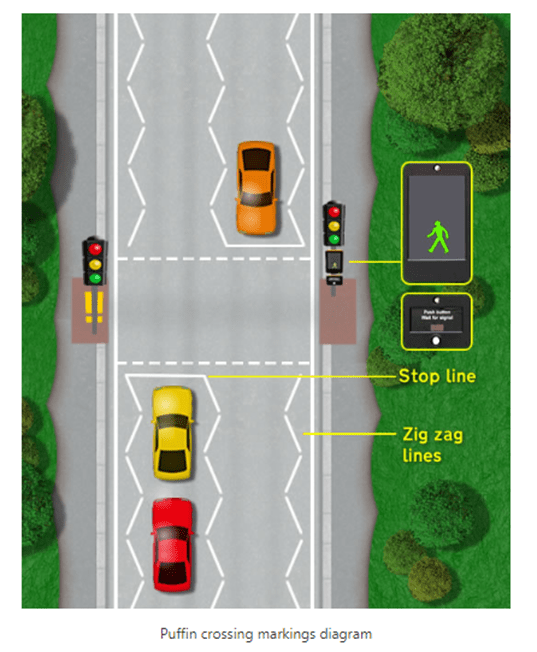
- Standard single Puffin crossing (including high friction surfacing on approaches) typically costs between £100,000-£120,000, including design fees.
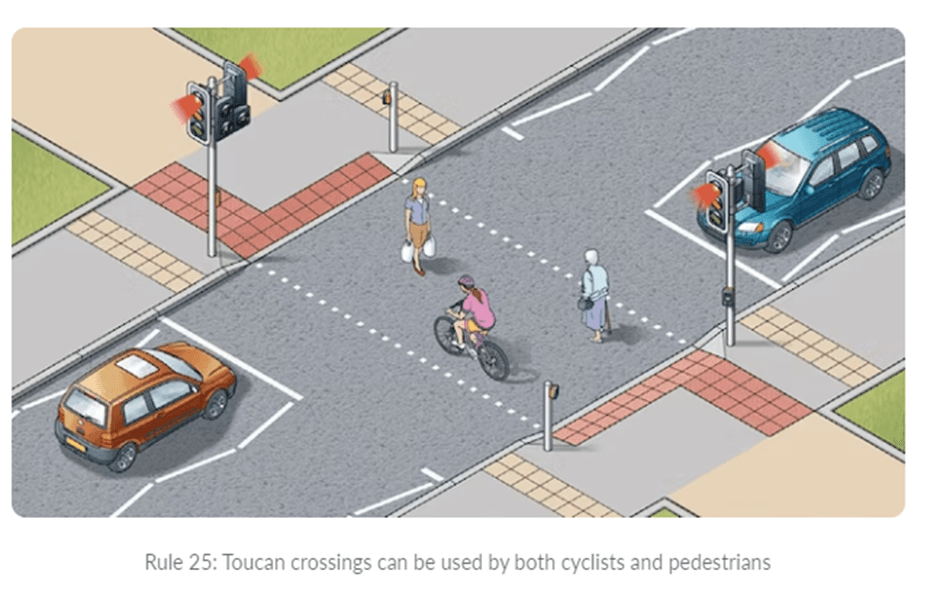
- Standard single Toucan crossing (including high friction surfacing on approaches) typically costs between £120,000-£140,000, including design fees.
For a small sub-urban roundabout to be ripped up and replaced with a four-way junction. such as the Jordanhill roundabout rip-up and conver to junctions, according to Wiltshire council, as opposed to Glasgow city council, would be £480,000.
You’ve got materials – underground wiring and brackets, columns, poles, custom-made hardware, software, concrete pouring, tactile paving, and that is just some of the material.
The time and effort of the civil engineers, project management team, and cost management. This is why civil jobs cost a fair amount.
These are only the direct costs, not considering the cost of ripping up the old junction, the embedded carbon, air pollution, noise pollution, etc.
Suppose we were in France or the Netherlands. In that case, they’d save themselves a fortune and build a bunch of zebra crossings with maybe raised junctions and different coloured tarmac. Due to motorists respecting the basic rules of the road, that would be the end of it.
Call me mad, but I have seen thousands of comments on Facebook, Twitter, and almost suburban revolutions created at the consultations for bike lanes that don’t cost much more or less yet garner national coverage.
Now, the maintenance and asset management costs.
Looking at my old methodology, I broke this down to Traffic Signals, Pavement and Landscaping. To briefly explain each.
Traffic lights need consistent and regular maintenance – road maintenance team staff. Then, ongoing power costs for the signals. Thirdly, there’s the periodic need to replace signal heads due to wear and tear or technological advancements – remember the significant shift to LED lights.
Furthermore, the hardware and software responsible for signal timing, which ensures traffic flow and provides some form of pedestrian safety, requires routine checks and occasional updates.
As you can imagine, this specific data is more challenging to come by and try than I might. I could not find any for Scottish councils – between the various funding pots, annualised salami slicing, departmental budgets, etc.
However, Transport for London, have created the Streets Toolkit give a complete insight into this topic –
The London Assembly also answered questions publicly.
“What is the typical cost for installation and annual maintenance by Transport for London (TfL) for adding: a) a new zebra crossing, and b) a new light-controlled pedestrian crossing to a road?”
This supported Wiltshire’s estimated spend.
But the critical thing is they also stated the maintenance cost – £2,000. Then, following a FOI request – in 2019/20 budget identifying that for the 6,416 signals, the budget was set at £2,980.35 per signal so a budget of £19,126,096 for, just traffic lights.
Now putting my consultant hat on, and then my common-sense hat, how many junctions are involved in road traffic incidents and need replacements, etc. I can only assume this cost is built into the overall budget as an additional burden.
Another part, Pavement. So I’ll keep this brief, as the case is stacking up against lights – Roundabouts can reduce wear and tear on road surfaces due to continuous traffic flow; the continuous flow of traffic in roundabouts helps to the abrupt braking and acceleration from all vehicles. This is short of it. Check the long read.
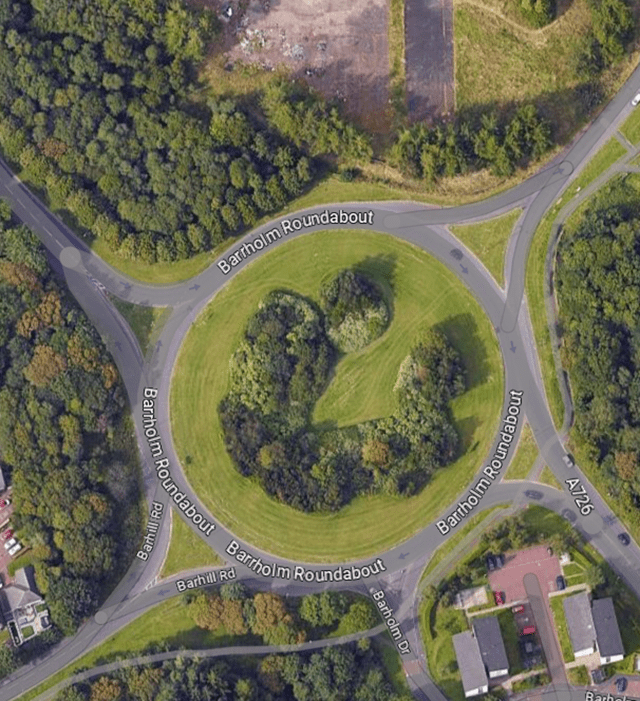
Landscaping and roundabouts have landscaping costs. See this happy roundabout in Erskine from Google Earth; if adequately pruned, it makes a face. This roundabout demonstrates the cost of landscaping, pruning, and general management of the central area. But this actually supports broader benefits.
Part 4. The Environmental Benefits
I am saving this point for last. It is the most important as it helps us in our fight against local air pollution and climate change.
They simply ensure that emissions are reduced through less starting and stopping. Now, this doesn’t take away the fact that you will still have pollution, and the source of pollution is the motoring. But we want to reduce that if possible.
Back over the pond, this time to Freakonomics–

In one section, Doug Hecox, the Federal Highway Administration, “Many in the environmental community like the fact that because traffic isn’t stopped, like it is at a traditional signalised intersection, you don’t have vehicles idling and therefore the emission from those idling vehicles is less. Significantly less. And so the air quality is improved.”
Jim Brainard, again, from the BBC article, is the mayor of Carmel, Indiana. – Our city engineer “has calculated how many tons of carbon we save every year”…. “We think that we save on average around two, three million dollars a year of fuel for the general public by replacing stop lights”. Both guys are supported by the evidence from academic research.
This further goes into the details – Installing roundabouts in place of traffic signals or stop signs has been found to
- reduce carbon monoxide emissions by 15-45%
- nitrous oxide emissions by 21-44%
- carbon dioxide emissions by 23-34%
- hydrocarbon emissions by 30-40%
Hu et al., 2014; Várhelyi, 2002).
This data and research, coupled with the fuel savings, adds further to the case that the reduction in fuel consumed, emissions, and then, as seen in our smiling roundabout, can provide a carbon and emissions sink with woodland, flowers, and natural habitat.
This makes the argument succinctly that Roundabouts when at scale, can be relatively good investments for Glasgow in its battle with air pollution
Conclusion
To bring this howl to the moon to an end it might appear trivial. But these choices we make in our cities have consequences and reflect our travel direction…..I had to get the pun in.
They reflect what we value, and we must question whether we value safety, environment, and health.
So, from Paris to Bath, traffic engineers have shown that roundabouts have longevity and adaptability, like the Swindon magic roundabout.
The evidence is compelling: roundabouts enhance road safety, reducing severe crashes by a staggering 50% to 70%, and present a more economically viable and environmentally friendly solution.
The continuous flow of traffic they facilitate minimises wear and tear on roads, reduces emissions, and even offers some smiles and environmental benefits through central landscaping.
In an era where sustainability, safety, and fiscal responsibility are paramount, the case for roundabouts is robust. Glasgow stands at a crossroads (or a roundabout) of decision-making like many cities. The choice seems clear: for a safer, greener, and more efficient future, we must embrace the roundabout.
Read more: Roundabouts vs. Traffic Lights: The Road to Safer, Greener, and Cost-Efficient Cities






Leave a reply to Embracing an Agile Mindset in Daily Life – Horizon Glasgow Cancel reply