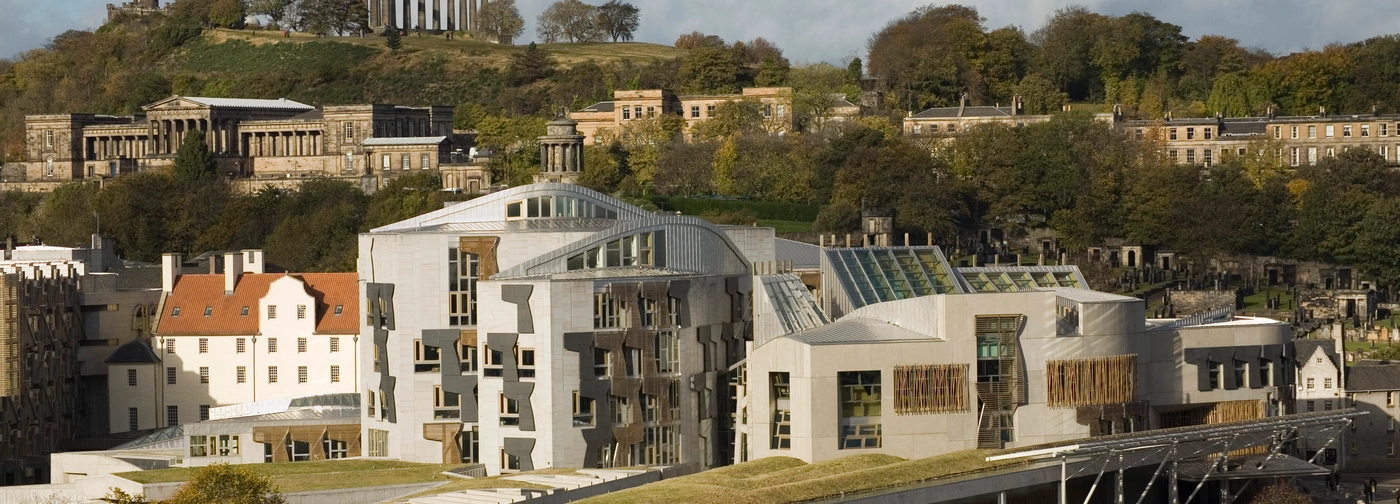

The Scotland 2026 election handed Holyrood its most fragmented parliament in devolution’s history. Much of the commentary read the rise of Reform UK as a rejection of progressive politics. The numbers suggest something else: a demand for a more practical, credible version of it.
Sir John Curtice’s BBC analysis called UK politics “more fragmented” than at any point in living memory. Within hours of the count the narrative had hardened into a familiar shape, a rejection of the SNP-Green agenda, a signal to cut taxes, a warrant to walk back from net-zero. The polling and seat data suggested something more complicated.
This post is about what the result means for how Scotland thinks about business, growth, and risk over the next decade , written from three vantage points: as chair of Glasgow Eco Trust, as a senior project manager at the University of Glasgow, and as a football coach at Drumchapel United.
The Receipts: Greens Up, Reform In, Big Parties Punished
What actually happened on 7 May 2026:
- The Scottish National Party (SNP) won 58 seats, a fifth consecutive Holyrood victory, but seven short of a majority.
- Scottish Labour and Reform UK tied for second with 17 seats each, a historic first.
- The Scottish Conservatives suffered their worst-ever Holyrood result, collapsing from 31 seats in 2021 to 12.
- The Scottish Greens took their first-ever constituency seats, Glasgow Southside and Edinburgh Central, the latter at the direct expense of SNP heavyweight Angus Robertson, to hold 15 MSPs in total, up from 8.
Source: Scottish Parliament Information Centre (SPICe).

Turnout fell 10.3 points to 53.2%, the biggest single-election drop since devolution. Four parties now hold seats in Edinburgh for the first time.
Across England, Labour, and the Conservatives lost hundreds of council seats to Reform, the Greens, and the Liberal Democrats. The fragmentation ran in both directions, right-populist and left-green, at once.
How Voters Actually Voted: Values, Not Tax Cuts

Some high profile “pro-business” analysis treated the vote as a simple left-right transaction. The polling evidence pointed elsewhere.
The Institute for Public Policy Research (IPPR) Scotland post-election analysis, drawing on YouGov polling of 1,603 Scottish adults (24 April–5 May 2026), found 54% of Scottish voters preferred a government that reflects their values over one that simply delivers for them personally, a margin of 18 points.
Among progressive voters (SNP, Labour, Green and Liberal Democrat combined) that figure rose to 63%. On climate, 77% of progressive voters supported the UK’s net-zero target, against 61% overall and just 25% of Conservative and Reform voters.
The Uncomfortable Finding
Across all voter groups, including Conservative and Reform, there was broad agreement that public services had been run down and that this explained much of Scotland’s struggles. Yet almost every party’s manifesto proposed cutting the public-sector budget, a stark disconnect between diagnosis and prescription.
The data confirms voters noticed that gap. They did not vote for a transaction; they voted for a value system that takes the diagnosis seriously. This was a verdict on credibility, not left versus right.
At Glasgow Eco Trust, which I chair, that pattern is recognisable in microcosm. They discuss heating bills, buses that do not show up, and whether their children can walk to school safely. That is the ledger by which they judge whether politics is serious.
A Long-Horizon View From the Campus

The same logic plays at the University of Glasgow, where I work as a senior project manager. The institutional strategy rests on three pillars, community, connectivity, and solving the challenges of today, with commitments to carbon-neutrality by 2030 and to inclusive economic growth. Those commitments shape real decisions on capital projects, research, estates, and workforce planning.
In those rooms, the question is never whether to defer the important projects and hope conditions improve. It is the opposite: what can the institution afford to build and run over the next ten years, and what is the risk if it does not?
That is how organisations built to last think about growth, as a platform to build on. Not as a public service of the last resort, like so many other public services are treated.
Too many commentators still behave as if austerity will somehow lead to growth. The Fraser of Allander Institute downgraded Scotland’s 2026 growth forecast to 0.9% in April. On that trajectory, Scotland cannot cut its way to better public services. The arithmetic does not work.
On the Touchline
At Drumchapel United, where I coach, the conversation runs along similar lines at a more granular scale. Parents on shifts, zero-hours contracts, trades, small businesses. People sympathetic to populist ideas out of frustration, angry at the state of our public realm but unsure where the blame lies. Their politics are messy; their ask is simple: predictable bills, working services, a better future for their children.
The Office for National Statistics (ONS) reported in May 2026 that pay rolled employment had fallen by 104,000 in the year to March 2026 on provisional data. That isn’t just a statistic. To me, that is a student support, a parent supporting their kids at football or someone able to pay for the services at the Eco Trust.
Fragmented Parliament Means Negotiated Budgets
Curtice’s verdict carries practical consequences. The SNP governs as a minority, with support built issue by issue, stretching across party lines. However, the Conservatives don’t want to enable the SNP and the SNP have refused to engage with the politics of hate dressed up as a “concern” from Reform.
The Scottish Fiscal Commission (SFC) spelled out the terms before the election. In its February 2026 report, Professor Graeme Roy and colleagues put it plainly:
“Manifestos should make clear if meeting their commitments would mean cutting other areas of spending, or raising more revenue to fund them.”
By 2031, nearly one in four Scots will be over 65. Audit Scotland, citing SFC forecasts, expects devolved social security spending to rise from £6.9 billion in 2025/26 to £9 billion by 2029/30. Living standards are forecast to grow by less than 1% a year. Child poverty targets and net-zero commitments are written into law, yet interim poverty targets have already been missed.
The Institute for Fiscal Studies (IFS) concluded that Scotland “still faces tough choices on tax, spending and public services,” and economists polled by the Financial Times agreed: taxes will almost certainly have to rise before the next UK general election. The question is not “tax or no tax”, it is who pays, for what, and what do we get in return?
What People Were Voting About
Top voter concerns weren’t abstract: the NHS, the cost of living, housing, and climate.

On energy, The Ofgem price cap sat at £1,641 for April–June 2026, with a further £200 rise warned for July. Eight in ten people told the End Fuel Poverty Coalition in April that they feared rising bills, and a clear majority backed a windfall tax on energy companies. That was not a “green ideology” finding; it was a cross-party consensus among the people paying the bills.

On wages, the Centre for Economic Performance at LSE found UK labour productivity grew by just 0.5% a year between 2011 and 2019, leaving it 26% below its pre-2007 trend. Had UK business investment matched comparable economies between 2008 and 2022, GDP would be roughly 4% higher, lifting average wages by approximately £1,250 a year.
This was chronic under-investment, not over-taxation. People who have not had a real pay rise in twenty years are unlikely to believe marginal tax cuts will change their lives.
What Investment-Led Growth Actually Looks Like for Scotland
The case for investment-led growth does not rest on ideological preference. The evidence suggests it is the least risky way to run a modern economy — and that evidence now exists in Scotland.

The PwC Good Growth for Cities 2025 report ranked Edinburgh second in the UK, up seven places. Glasgow rose 13 places. Aberdeen was the most-improved city in the entire UK index. PwC also found Scotland placed the highest priority on work-life balance of any UK region, and above-average priority on income distribution. Scottish voters were not asking for trickle-down. They were asking for quality of life and fairness.
Retain Wealth Locally
In March 2026, Scotland legislated for Community Wealth Building at national level, becoming the first country in the world to do so. The Community Wealth Building (Scotland) Act 2026 requires councils, health boards, and public bodies to retain wealth locally, buying from local suppliers, supporting cooperatives, and helping communities acquire land and buildings.
The model is not theoretical: in Preston, anchor-institution procurement rose from 39% to 79.2% between 2012 and 2020, retaining an additional £199 million locally and adding 4,000 people to the Real Living Wage by 2018.

On Public Equity in Energy
On energy, Common Weal estimated that Scotland forwent between £3.5 billion and £5.5 billion a year in potential public revenue by not taking equity stakes in ScotWind. Community-owned turbines generated 34 times the local revenue of developer community-benefit funds.
Read together, the evidence offers two propositions. Public or community energy delivers predictable bills in a volatile world.
Community Wealth Building, Fair Work, and investment in skills, housing, retrofits, and transport give businesses a five- and ten-year planning horizon, a discipline that lowers risk rather than raising it.
The Path Forward: Five Strategic Challenges
The election delivered a fractured parliament where progress depends on finding common ground. From Whiteinch to the campus to the pitches at Drumchapel, the verdict was clear: the electorate demanded governance that takes its diagnosis seriously.
Five challenges the Scottish Government have to address.
- Acknowledge the fiscal reality. With growth forecast at 0.9% and social security costs rising toward £9 billion by 2029/30, the only viable path is honest taxation. Tax Justice Scotland sets out one pathway through progressive income tax, Council Tax reform, wealth and land taxation, and the closing of multinational loopholes. The question is no longer if taxes will rise, but who pays and what they receive in return.
- Embed climate in economic strategy. Scotland’s net zero targets are legally binding, not optional. The challenge is to ensure the economic value of the green transition, through community energy and the retrofit of the urban fabric, is retained locally rather than exported to global shareholders.
- Operationalise community wealth. With the Community Wealth Building (Scotland) Act 2026 now in law, the focus must shift from legislation to execution. Public bodies need to prioritise local procurement in practice, not principle, to retain wealth and create jobs the Jimmy Reid Foundation’s 2026 policy guide shows have been hollowed out by a 20% drop in training investment per employee since 2011.
- Bridge the values divide. Voters across the spectrum, from Reform supporters to Greens, agreed public services were broken. Reform’s 17 seats represented a mandate for correction rather than demolition: IPPR polling suggested their voters shared the diagnosis, even if their remedies differed. The opportunity lies in policies that address the shared diagnosis, even where ideological routes diverge.
- Invest in the long term. Men in Scotland’s most deprived areas live 14 years fewer than those in the wealthiest. The decline in apprenticeships and training is a direct threat to future productivity. The next parliament must treat skills, health, housing, and infrastructure not as line items to be cut, but as the platform for sustainable growth.
The engine of a better Scotland already exists: the Community Wealth Building Act, Scotland’s rising position in the PwC Good Growth index, the Preston precedent, and the cross-party majority that backs fair taxation and the net-zero transition. The fractured parliament that emerged on 7 May is not a problem to be solved. It is a brief to be read and the institutions that plan in decades, not headlines, have already started reading it.
Leave a Reply