Adapting with Agility: Enhancing Daily Life
Applying an Agile mindset in daily life goes further than any project management framework can capture. In my previous post on Agile in the Third Sector, the focus was on organisations. This post is about something closer to home: how the same principles can reshape your health, your work, your relationships and, if enough of us act on them, even your city.
A brief reminder of the Agile Manifesto values:
“Individuals and interactions over processes and tools
Working software over comprehensive documentation
Customer collaboration over contract negotiation
Responding to change over following a plan.”
How the Agile Mindset Applies to Daily Life
Individuals and Interactions
Building strong relationships is the starting point. An Agile mindset in daily life means rejecting the self-help cliché of cutting out “negative people.” The best people in my life are those I disagree with on many things. Discourse, deliberation and genuine engagement over ideas, that is what builds trust. It is a two-way street, and trust only grows through it.
Getting Things Done: The “Working Software” Principle
In a personal context, “working software” simply means getting things done. It means setting achievable goals and building the structures around you that make reaching them easier. My wife and I wanted to eat better and get fitter. We did not overhaul everything at once. Starting small, we cut our animal products meal by meal and slowly built up our cycling and running distances. Three years later, we are entirely vegetarian. Inspired by Game Changers, Seaspiracy and most recently You Are What You Eat: A Twin Experiment, we have lost weight and feel healthier and fitter than ever.
Collaboration, Adaptability, and Reflection
Collaboration means accepting that you are not the master of your own domain. Lean on others. Reach out for support. Embrace conflict as an opportunity, not a threat.

Responsiveness and Adaptability means accepting that we are not fixed individuals. We change, we age, we experience emotions. If something is not working, reflect, learn and adapt. Fail fast, often fail and move on.
Reflection means focusing on broad values rather than narrow goals. Treat each challenge as practice for the next. In doing so, you adopt the traits and outcomes you desire over time not by willpower alone, but by building the right structures around you.
As the guys from the Who Gives a Fk podcast put it in their episode on goals: the key is not setting a goal but building the structures that make achieving it inevitable.
Remote Work as a Gateway to a Healthier Lifestyle
Two stone lost (12.7kg). 5,000km cycled. Vegetarianism adopted. No longer car-dependent. Additional certifications, new jobs, promotions, more time volunteered and generally more happiness. This is not narcissism. It is an honest account of what remote working made possible when combined with an Agile approach to structuring my life.
Why the Office Was Holding Me Back
Agile and traditional work practices both emphasise proximity and co-location. For a long time, I went along with that assumption. In practice, open-plan offices were a constant source of distraction noise, groupthink, impromptu interruptions, fire alarms.
As the Vox explainer on open offices makes clear, the evidence for them was always thinner than the enthusiasm.
What I needed was time to review, analyse and assess before sharing. Tools like MS 365 and Google Workspace made real-time collaboration possible without sitting next to someone. If people learn to leverage technology rather than see it as a stumbling block, they get their time back.
Time Is the Real Currency
Time is the crux of a healthier lifestyle. When I shifted to remote work, before the pandemic, the transformation was gradual but profound. Waking up early, I tackled admin and training first. Then a cycle or a walk. By lunchtime, homemade soup or salad. Afternoons for meetings. Evenings for personal pursuits. It felt liberating.
Gone were the days of grabbing a roll shop breakfast to make the 6am train. Gone was the guilt of not being a productivity hero unless I was physically visible. My professional development, physical and mental health were no longer bolt-ons they became baked into my day.
The Stanford hybrid working study published in Nature (2024) confirmed what many already knew: hybrid work does not damage performance, reduces quit rates by a third, and significantly improves job satisfaction. A separate UK survey by Mortar Research in 2024 found that 86% of hybrid workers said eliminating the daily commute improved their work-life balance, and 93% reported a positive impact on mental health.

Professional Growth Through Remote Working
The shift to remote work was not just good for my health. It became a catalyst for professional development. In the quiet of a home office, there was space to go deep on new challenges from writing blogs to learning data analysis, GIS tasks, and Excel skills. This would have been difficult to prioritise in a traditional office environment.
The flexibility of remote work opened up time for online learning: software development through JetBrains Academy and project management through PMI certifications. These were not just new skills. They were new ways of thinking breaking tasks into manageable chunks, iterating to improve, testing and learning.
Research shows that remote workers are significantly more likely to pursue additional training —and when organisations fail to support that learning, people leave. As Microsoft’s research puts it: if people cannot learn, they will leave.
My partner’s experience shows the same pattern. Leaving consulting behind, she moved into Interaction Design at the Glasgow School of Art. Her ability to wake up with an idea, work across different tasks throughout the day, take inspiration from unexpected places and then code at 9pm when everything else is settled is still remarkable to watch. Remote and flexible working made that possible.

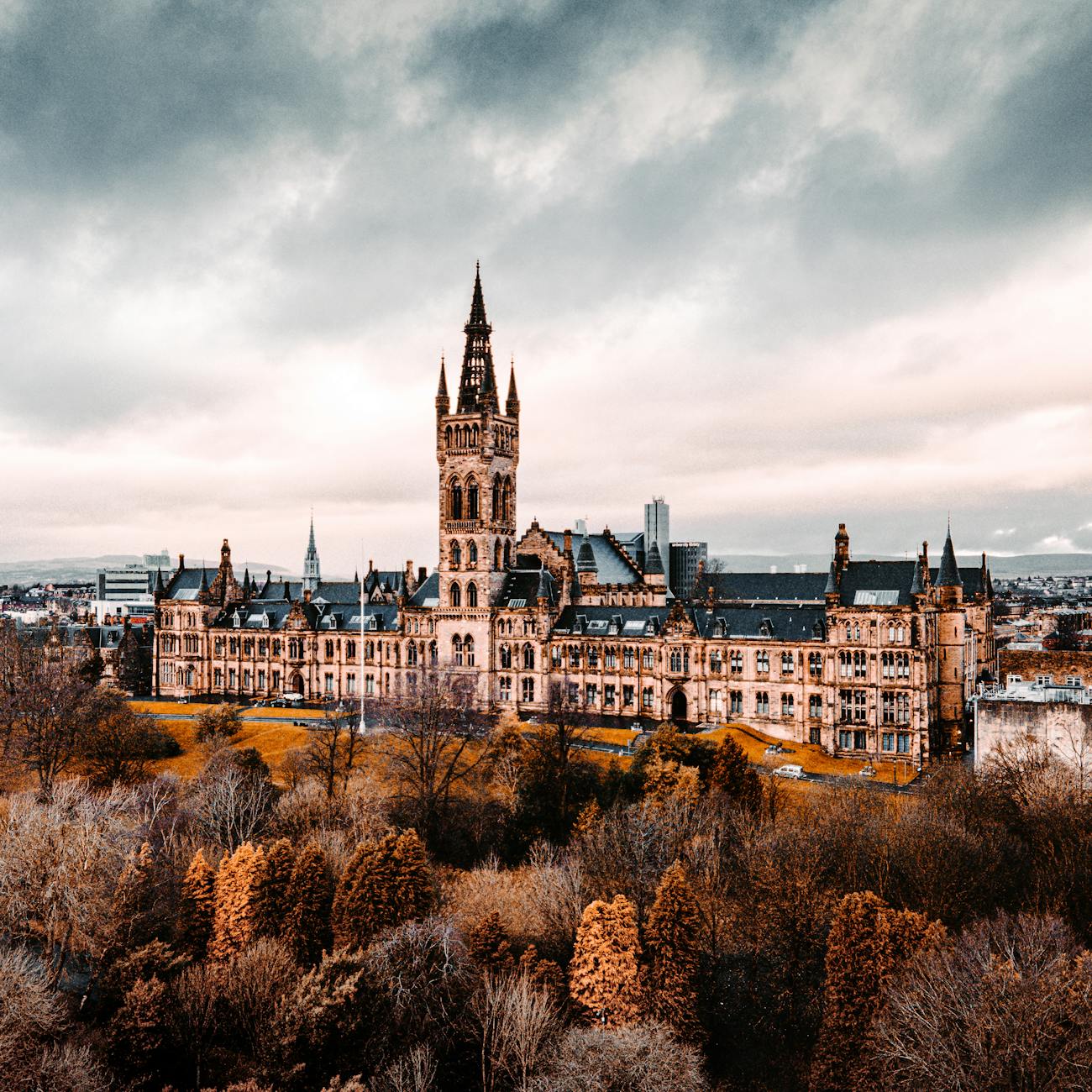
Benefits for Glasgow: How Remote Work Is Reshaping the City
From Personal Choice to Collective Impact
What happens when you scale individual choices — remote work, cycling, local spending, urban living — up across a whole city? The transformation of Glasgow’s working culture, where thousands of office workers are now hybrid or fully remote, is already reshaping how the city functions.
Glasgow is experiencing short-term pain. It is a particularly hollow city in terms of density, carrying over 60 years of suburban sprawl new towns, out-of-town retail, and car dependency that compounds problems many UK cities face:
- Greedflation: inflation driven by excessive corporate profit-taking rather than rising input costs.
- Land banking: land purchased as investment and held without development, stalling regeneration.
- NIMBYism: local opposition to developments that would benefit the wider community.
- Austerity: reduced public investment that leaves gaps only community-led action can fill.

24th Feb 2025
| thinking
| kevin Langan
Glasgow’s Vision: Repopulating the City Centre
The City Centre Strategy 2024 – 2030 for repopulating Glasgow city centre with residents rather than keeping it a transient commuter zone is the right response to these pressures. Making the city centre less car-centric, more liveable and more accessible is not a niche political preference. It is the economic logic of the 15-minute city.
In December 2025, Glasgow City Council approved the Cook Street Urban Garden development in Tradeston,750,000 sq ft (0.07 km²) of residential, commercial and leisure space, designed around walkable living just south of the Clyde. It is undoubtedly the kind of development that turns individual lifestyle choices into neighbourhood-scale change.
People who live in the city centre do not commute. They spend their money locally on services, food, leisure, and community. Less time in transit means more personal time, less traffic congestion and less pollution. It is a win-win for individuals and for the city.
Conclusion: Embracing an Agile Mindset for a Better Tomorrow
The lessons from adopting an Agile mindset in daily life are not just personal wins. They are blueprints for a broader transformation in how we work, how we eat, how we move, and how we build our cities.
An Agile mindset goes beyond project management. It is about adapting to life’s ebb and flow, embracing flexibility and prioritising what truly matters. Health, professional growth, meaningful relationships and daily structure are not separate goals but interconnected systems. Improve one, and the others tend to follow.
For Glasgow, the shift is already underway. Reduced commuting, city centre regeneration and growing community life are not distant ambitions, they are emerging realities. The collective move towards more sustainable, balanced and fulfilling ways of living is building something bigger than any one person’s choices.
Keep your mind Agile, your actions impactful and be kind.

Some Further Reading

Leave a Reply