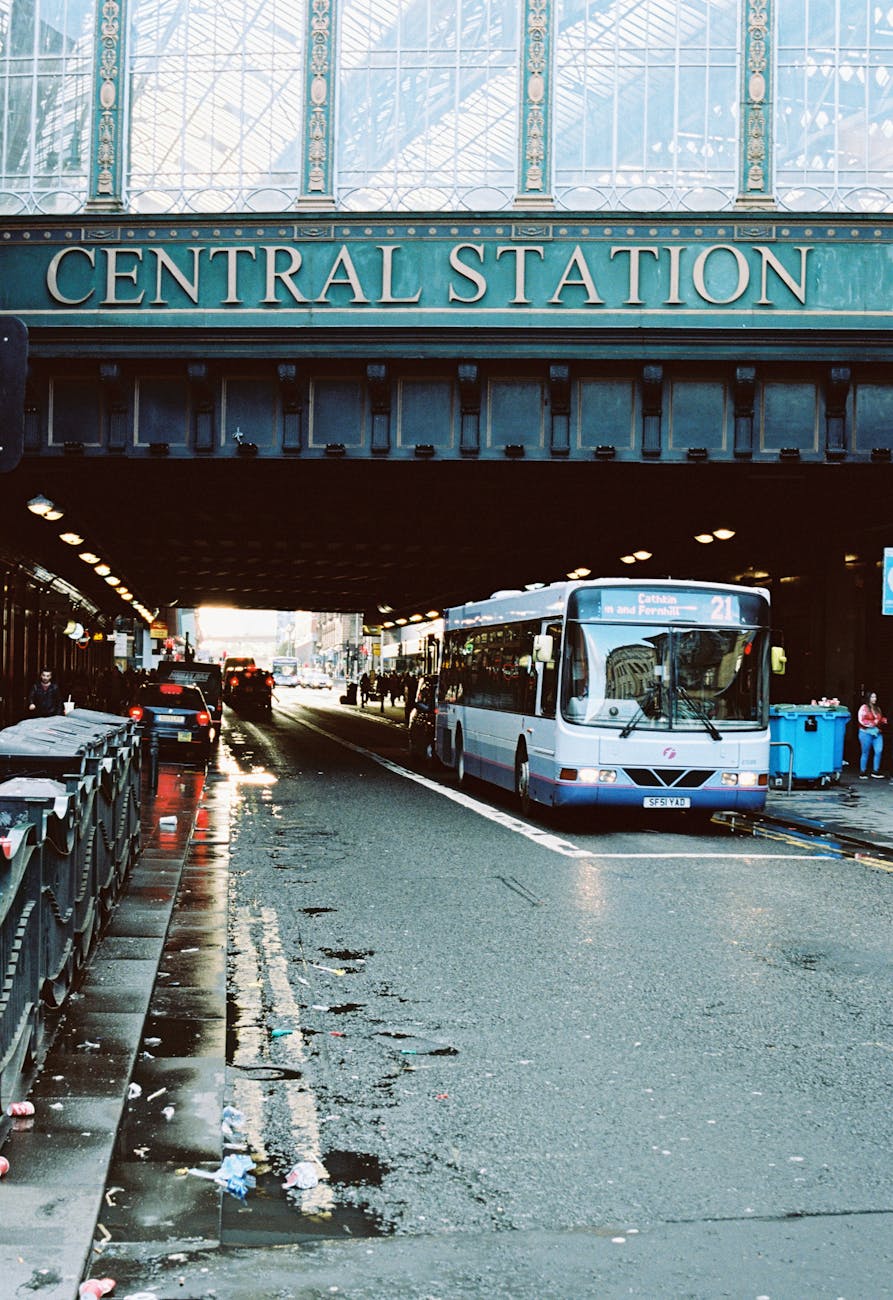
Part 1 Rethinking Glasgow’s Urban Mobility with Road Pricing
Stop spending money on landscaping, cycling, community groups, and welfare, and fill all the bloody potholes. This will save motorists money, boost the economy, and return us to the land of milk and honey.
So the story goes.
It is a familiar argument. It is also one that collapses under the weight of its own evidence. So, let us ask the question those people never bothers to ask: how much money would actually be needed to meet the demands of UK motorists and who should pay for it?
Calculating the true cost of road maintenance is not straightforward. Funding for road maintenance, repair, and building is divided between local and national government, making any single headline figure difficult to pin down. Two independent bodies help frame the scale of the problem.
The Asphalt Industry Alliance (AIA) ALARM 2023 Survey found that England and Wales’s local road maintenance backlog has hit a record £14 billion. After accounting for inflation, the shortfall between current funding and what is needed to prevent further decline jumped by a further £1.3 billion in 2022/23 alone. Furthermore, the ALARM 2023 executive summary shows that the average shortfall in the 2022/23 carriageway budget across England and Wales increased by 20% to £7.7 million per authority, with the total shortfall reaching £1.30 billion.

The pothole problem tells the same story from street level. In 2023, the RAC Pothole Index recorded that potholes reported to councils increased by 23% between 2021 and 2022 and RAC patrols attended nearly 30,000 pothole-related breakdowns in 2023, up 33% on the previous year.

These are not isolated data points. They describe a structural funding failure, one that more spending alone cannot fix. The harder question is not how much money to spend, but how to build a system that connects the cost of roads to the people and vehicles that use them most.
This piece examines whether road pricing in Glasgow now actively being explored by Glasgow City Council and formally noted in the Scottish Parliament could cut congestion, clean up the air, and make transport fairer for everyone, including the 40% of Glasgow residents who do not own a car.
Part 2: Uncovering the True Cost of Roads
Roads are essential to economic activity and individual mobility. That is not in dispute. What is disputed, or more accurately, what is rarely examined, is what roads actually cost and who really pays for them.
Beneath the apparent convenience of the UK’s road network lies a hidden truth: the cost of roads extends far beyond what drivers pay at the pump or in vehicle excise duty. This hidden subsidy distorts public perception and masks the significant financial and environmental burdens that fall on society as a whole.
The Financial Burden
Building and maintaining roads is a considerable financial undertaking. The Department for Transport estimates that in 2021–22, the government spent over £27 billion on national highways and local roads combined. That figure, however, only tells part of the story.
A report by the Institute for Fiscal Studies (IFS) estimates that the total costs associated with roads in the UK, including environmental impacts and accidents, are around £750 per person per year, though even that figure is contested. The same report notes that motoring raises around £40 billion a year for the exchequer, approximately 5% of government revenue.

Many people point to that £40 billion as evidence that drivers more than pay their way. On a narrow reading, £40 billion appears to cover the £27 billion direct spend. But that calculation ignores the long-term and wider costs entirely: congestion externalities, air pollution, climate change, road traffic casualties, and the quality of life impacts on communities near busy roads. When those are factored in, the current model heavily subsidises motoring at everyone else’s expense.
Who Pays the Hidden Price
This inequitable distribution creates a hidden burden for a significant portion of the population. Pedestrians, cyclists, and public transport users bear the environmental and health consequences of road use air pollution, noise, pedestrian casualties without contributing to the financial costs or receiving any direct benefit.
In Glasgow, where 40% of adults do not drive or own a car, that subsidy is particularly difficult to justify.

The Evidence Is Already Here
Critically, the tools to address this imbalance are not theoretical. They already exist, and they already work in the UK.
London’s congestion charge reduced traffic entering the zone by 18% on introduction, cut congestion by 30%, and boosted bus travel by 33%. Over 20 years it has helped avoid three million additional car journeys annually. Research published by the Royal Economic Society found it also reduced crashes by 46% within the cordon zone.
Glasgow’s own Low Emission Zone introduced in June 2023 and fiercely opposed by the same voices that resist every traffic management measure has already delivered a 34% reduction in nitrogen dioxide levels within the zone, compared to 2022. In 2024, for the first time since the Local Air Quality Management process was established in 1995, Glasgow met all of its statutory air pollution objectives. Hope Street, once the most polluted street in Scotland now records levels nearly 10% below the legal limit.
These schemes directly connect the cost of motoring to the individuals who benefit from it. They have demonstrably changed behaviour, cleaned the air and generated revenue for transport investment. The LEZ is proof of concept on Glasgow’s own streets.
Shifting towards a fuller user-pays system including road pricing builds on this evidence. It could address the financial and environmental imbalances that the current model ignores, create a more transparent and equitable system, and fund the infrastructure improvements that neither drivers nor pedestrians are satisfied with today.
Part 3: The User-Pays Principle: What It Is and Where It Works
Imagine paying only for the roads you actually use. If you hardly drive, you hardly pay. If you drive every day, you pay every day, just as a bus or train passenger pays per journey.
That is the user-pays principle applied to roads. It is a straightforward idea. What is less straightforward is why the same politicians and think tanks that champion user-pays when dismantling healthcare, education and welfare have never once applied it to roads.
The distinction matters. Unlike healthcare or education, universal services with no harmful externalities motoring is one mode of transport among many. It carries severe negative consequences: air pollution, congestion, climate emissions and road casualties. A user-pays model does not punish driving. It connects the cost of a choice to the person making it.
Who Already Does This?
Tolled road networks are not experimental. They are the global norm.
- France: Autoroutes Service: a national motorway network where tolls fund both maintenance and expansion. French motorway concession companies generated €12.8 billion in turnover in 2024,up 4.3% on the previous year, driven by higher toll rates.
- Italy: Autostrade: extensive motorway tolling across the entire peninsula.
- Spain: Audasa: regional toll roads covering major corridors.
- United States: Extensive state toll systems including Florida’s Turnpike, the New Jersey and Pennsylvania Turnpikes, and major toll roads in Texas and California. The network is so complex that commercial operators use consolidated toll payment partners like Bestpass to manage cross-state fees.
- China: A rapidly expanding expressway network with the vast majority of routes tolled.
- India: Developing national highways and expressways managed through NHAI’s tolling infrastructure.
- Japan: A significant network of toll expressways across the country.
- Singapore: The global gold standard. The Electronic Road Pricing (ERP) system, introduced in 1998, uses real-time dynamic pricing to maintain optimal traffic speeds rather than maximise revenue. It reduced vehicles entering the restricted zone by 45% and increased the share of commuters using public transport to 65% of CBD arrivals. Singapore is now rolling out ERP 2.0, a satellite-based system capable of distance-based charging, with full transition expected by 2027.

Does It Work? The French Case Study
The French motorway network offers a financially transparent example at national scale. According to Statista, French motorway companies generated €10.47 billion in revenue in 2018 across a 9,173.7 km network. By 2024, the French Transport Regulatory Authority (ART) reported that turnover had grown to €12.8 billion, a sustained and growing revenue stream built on a simple per-use charge.
| Description | 2018 (Statista) | 2024 (ART) |
| Total Revenue | €10.47 billion | €12.8 billion |
| Total vehicle-km travelled | 95.0 billion | Growing (+0.3% in 2024) |
| Revenue per vehicle-km (2018) | €0.11 |
To put the per-journey cost in perspective: at €0.11 per vehicle-kilometre, a 10 km commute costs roughly €1.10. That figure is comparable to a bus fare, and considerably less than the fuel cost of the same journey.
Beyond Financial Fairness
The user-pays principle delivers benefits beyond revenue. By attaching a marginal cost to each journey, it changes behaviour at the edges, nudging the discretionary trips towards carpooling, public transport, cycling or walking. Those shifts reduce emissions, ease congestion and improve air quality across the whole city, not just for those who made the switch.
As Singapore’s experience demonstrates most clearly, the goal is not to maximise revenue from road users. It is to maintain a transport system that moves people efficiently, equitably and sustainably and to make those who generate the costs contribute to solving them.
That is the principle Glasgow needs to apply.
Part 4 Environmental and Social Benefits of Reduced Road Use.
It hardly seems a day goes by without another lazy article in the Express, Mail or a click-hungry “local” news site railing against low emission zones and low traffic neighbourhoods, or projects such as the Glasgow Avenues programme.
The script is predictable. Grumbling locals are framed as victims because life apparently no longer revolves around cars. The idea that people living on busy streets might want something better than a noisy, polluted car sewer is treated as radical. In the most perverse logic, bike lanes, slower traffic, trees, planters and pedestrianised streets are painted as the cause of environmental damage and road deaths. By that logic, driving faster and paving more tarmac is the solution.
Reducing road use is essential for achieving meaningful environmental and social benefits. That should be an obvious statement. Scroll any Facebook thread on traffic management and it becomes clear it is not.
Health: Cars, Food and a Buckling NHS
The UK is one of the most overweight nations in Europe, with around 28% of adults living with obesity and a further 36% overweight. The NHS is already straining under preventable conditions driven by unhealthy systems, primarily how we move and what we eat.

The Food Foundation’s Broken Plate reports show how an unhealthy food environment drives poor diets. A car-dominated urban environment does the same for physical inactivity. Together, they lock people into patterns that shorten lives and overload the health service.
Air Quality, Noise and Everyday Stress
Research consistently shows that reduced vehicle emissions improve air quality and public health. The systematic review of the Economic and Social Benefits of Low-Carbon Cities, a systematic review for the Coalition for Urban Transitions, shows that low-carbon investments in buildings, transport, and waste systems can simultaneously cut emissions, create jobs, improve public health and enhance social inclusion.
During periods of reduced road traffic, the Centre for Research on Energy and Clean Air reported that major cities worldwide saw a 20–30% improvement in air quality, leading to fewer respiratory and cardiovascular problems. Decreasing road use mitigates environmental degradation and fosters healthier communities. Improved air quality correlates with lower rates of asthma, bronchitis, and other respiratory diseases, particularly among children and older people.
Reduced congestion also lowers noise levels and everyday stress for urban residents. Less traffic means less constant engine noise, fewer sirens and fewer near-misses at crossings, all of which improves quality of life in ways that are hard to quantify but easy to feel.
Streets People Actually Want to Be In
Less traffic and lower speeds make walking and cycling more attractive. That alone brings public health gains more daily physical activity without anyone having to “go to the gym”. From a social perspective, reduced reliance on private cars creates more vibrant and accessible urban spaces, with more chance encounters, stronger local businesses and more eyes on the street.
Glasgow’s own Low Emission Zone and Avenues projects show what this looks like in practice. Since full LEZ enforcement began in 2023, nitrogen dioxide levels in the city centre have fallen by around a third, and Glasgow has met all of its statutory air pollution targets for the first time since records began in 1995. Hope Street, once the most polluted street in Scotland, is now below the legal limit. That is not theory. It is what happens when you reduce through-traffic and prioritise people over vehicles.
Why This Points to Road Pricing
Taken together, the evidence is clear: policies that discourage excessive car use, congestion charges, low emission zones, higher charges for the most polluting vehicles, and investment in high-quality public transport and active travel deliver cleaner air, quieter streets, better health and stronger communities.
The question for Glasgow is not whether these measures work. They do. The question is whether we choose to apply the same user-pays logic to our roads that we already accept for trains, buses, and even car parks.
By prioritising investment in infrastructure that supports walking, cycling, buses and trains, and by introducing targeted road pricing that reflects the true costs of driving, Glasgow can create a multiplier effect: healthier residents, a more attractive city centre, lower long-term NHS costs and real progress on climate targets.
This is the why behind introducing a user-pays principle into Glasgow’s road network. The next question is how and that is where the road pricing proposals come in.
Part 5: How Glasgow Can Implement Road Pricing
Implementing user-pays systems such as road pricing or congestion charges in Glasgow will not be easy. There will be public resistance over perceived unfairness and cost, and there are genuine logistical questions about how to implement and enforce any scheme.
Those concerns are already visible. As explored in my piece on Glasgow’s housing emergency and parking politics, councillors and MSPs have faced torrents of abuse over the Low Emission Zone, bus lane fines and even the prospect of a modest workplace parking levy.
The question is not whether there is pushback. There is. The question is how Glasgow can design a road pricing system that is technically robust, socially fair, and politically defensible.
Step 1: Start with Road Tolls
Glasgow City Council and Transport Scotland could implement an automatic toll system, using technologies that are already standard in many countries. Suppliers such as Kapsch provide RFID tags, gantries and back-office systems to capture vehicle data, calculate charges and process payments.
Step 2: Define Strategic Toll Points
Using Glasgow’s existing road network, the city could identify a small number of strategic junctions where tolls would be applied. These are locations where traffic converges on the city, not local residential streets.
Glasgow City Council and Transport Scotland could:
- Use existing work on roundabouts and junctions to identify 13 key entry points around the city.
- Place automatic toll infrastructure at these sites, similar to systems used in other European cities.
- Use national DfT road traffic count data to understand volumes by vehicle type, time of day and direction of travel.
- Apply UK government vehicle classifications to set differentiated charges by vehicle type, making buses and coaches cheaper and the largest, heaviest vehicles more expensive.
Thirteen proposed toll points around Glasgow, based on DfT traffic counts and key junctions.
Step 3: Set Fair, Simple Prices
Using the DfT count data, indicative toll prices can be applied to estimate revenue and test behavioural impact.
For example:
- A commuter driving from Renfrewshire or East Renfrewshire into the city centre would pay £0.75 per trip.
- A driver travelling through the city centre to Edinburgh via the M8 would pay £1.50, or just £0.75 if routing via the M74.
- Buses and coaches would pay significantly less to avoid penalising mass transit.
These charges are deliberately modest. The personal outlay is minimal compared to existing costs such as fuel, parking, and rail fares. For context, the average price per litre of petrol is around £1.46, which buys roughly 8 miles of driving. Drivers are already spending significantly more than £1.50 in fuel on many daily journeys.


Step 4: Show the Revenue and What It Pays For
he key to public acceptance is transparency: how much money a 13‑point toll system could raise, and what exactly it would fund.
Using DfT traffic count data and the proposed price structure:
- A 13‑point toll system could generate around £108 million per year in revenue (before operating costs), based on current traffic volumes and the vehicle charges in the table below.
- Glasgow’s Roads Infrastructure Status and Options Report 2023, as reported in STV News, estimates that maintaining the road network in a “steady state” requires almost £31 million per year, while current spending is only £19.7 million, a funding gap of over £11 million.
- Even after allowing for operating costs, a well‑designed road pricing scheme raising on the order of £108 million annually would more than cover the steady‑state maintenance requirement, close the current shortfall, and still leave substantial headroom for resurfacing, safety improvements and investment in public transport and active travel.
Vehicle Type

Step 5: Design for Behaviour Change, Not Just Cash
Tolls are not only about revenue. They are also a tool for traffic management.
Even a modest charge:
- Encourages some drivers to switch to park and ride, the Subway, ScotRail or bus services where they are available.
- Creates demand and a funding stream for better bus, rail and active travel connections, particularly if the revenue is ring-fenced for these modes.
- Can be extended across other local authorities in the central belt to avoid simple traffic displacement.
One important dimension not yet baked into the model is environmental impact. As research from the University of Edinburgh on road wear and vehicle weight shows, heavier vehicles cause disproportionately more damage to road surfaces.
A more sophisticated toll system could:
- Charge by vehicle weight/size or emissions band rather than just broad type.
- Offer discounts for cleaner, lighter vehicles.
- Exempt or reduce charges for essential services and low-income users.
That would not only support road maintenance; it would incentivise a shift towards lighter, cleaner vehicles and lower emissions.
Step 6: Make the Technology Invisible
For any user-pays system to gain acceptance, it has to feel simple and fair. The technology exists today to achieve that.
- Automatic number plate recognition and RFID tags can minimise disruption at toll points.
- Mobile apps and online accounts can provide clear statements, caps and off-peak discounts.
- Integration with existing public transport and mobility apps can offer bundled products for example, a combined monthly pass covering tolls, bus, Subway and rail, encouraging multimodal travel.
If Glasgow designs road pricing in a way that is easy to use, transparent in pricing and visibly reinvests revenue into better alternatives, it can move beyond the perception of “another tax” towards a system most people see as fair, especially those who currently do not own a car but subsidise the network regardless.
Done well, this change would directly support Glasgow City Council’s Transport Strategy and Scotland’s wider goals on climate, health and reducing car dependency.
Part 6: What Glasgow Can Learn from Sydney
If Glasgow is going to be brave on road pricing, it helps to know that similar cities have already done this and made it work.
Sydney applies the user‑pays principle across a network of tolled motorways, bridges, and tunnels. Drivers pay to use key routes such as the Harbour Bridge and Tunnel, with charges varying by time of day. This is congestion pricing in practice: higher prices in the peak, lower off‑peak, with revenue reinvested in the wider transport system.
The Transurban Industry Report 2021 analysed how this model performs. It highlights three points Glasgow should care about:
- People think it is fair if the rules are right
In Transurban’s survey, 64% of respondents said a distance‑based road‑user charge would be fairer than the current system, once it was explained clearly. Support jumped by around 30 percentage points when two conditions were met:- low‑income drivers received concessions; and
- all revenue was hypothecated every dollar went back into transport, not general tax.
- It changes when and how people drive
Variable tolls on the Sydney Harbour Bridge and Tunnel encourage drivers who can be flexible to travel outside peak hours, reducing congestion at the busiest times. Trials of per‑kilometre charging found that people adjusted trip timing and route choice when prices reflected distance and congestion levels, without needing extreme charges to do so. - It funds alternatives, not just asphalt
Revenue from Sydney’s toll network is used not only for motorway maintenance but also for public transport upgrades, active travel links and electric vehicle infrastructure, helping build a more balanced transport system over time.
For Glasgow, the lesson is simple: user‑pays systems can be made fair and popular if they:
- price trips transparently,
- protect low‑income drivers and essential services, and
- visibly invest the money in better buses, trains, cycling and walking not just patching potholes.
Glasgow will never be Sydney. But it can borrow the parts that matter: peak and off‑peak pricing, clear concessions, and a cast‑iron guarantee that road pricing revenue is ring‑fenced for transport. That is the kind of design that moves a scheme from “war on motorists” headlines to a system most people can live with and many will actively support.
Conclusion: A Roadmap for Glasgow
Glasgow’s roads are deteriorating under the weight of larger vehicles and ever‑growing traffic, while funding falls millions short of what is needed each year to keep the network in a steady state. The current model expects everyone including the 40% of residents who do not own a car to subsidise a system that mainly benefits drivers. That is neither fair nor sustainable.
The evidence in this piece points to a different approach: a user‑pays road pricing system for Glasgow that is transparent, targeted and clearly linked to better alternatives. Modest tolls at key junctions, designed with safeguards for low‑income drivers and essential services, could fully fund road maintenance, invest in public transport and active travel, and cut congestion and emissions at the same time.
Cities like London, Singapore, and Sydney show that when road pricing is designed well with clear concessions and revenue ring‑fenced for transport it can be both effective and publicly acceptable. Glasgow has the same opportunity. By making those who use the roads most pay a fairer share of the true costs, the city can improve its roads, clean its air and create safer, more liveable streets.
This is not a war on motorists. It is an honest way to pay for the infrastructure we all rely on, while giving people real alternatives to driving.
If Glasgow chooses to lead on road pricing and user‑pays transport, it can move from patching potholes to building a city that is genuinely healthier, fairer, and ready for the future.
Some Further Reading: Road Pricing Glasgow: How the User-Pays Principle Could Fix Our Roads and Clean Our Air
- https://www.transport.gov.scot/media/47052/national-transport-strategy.pdf
- https://www.glasgow.gov.uk/CHttpHandler.ashx?id=55054&p=0
- https://www.strongtowns.org/journal/2018/8/3/toll-road-or-no-road
- https://www.marketurbanist.com/blog/the-case-for-embracing-tolls
- Raw Data from Excel Table – Traffic_Count_data_Revenue
Leave a Reply