
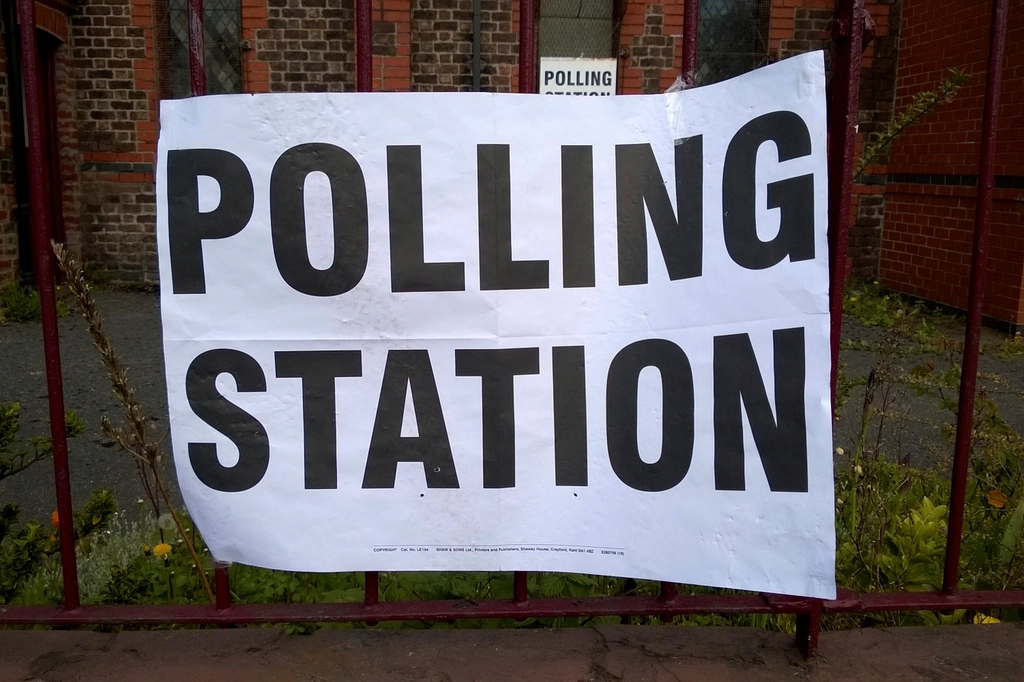

The 2024 UK election results were, in many ways, entirely predictable. When Rishi Sunak called the election when he did, my first instinct was that he had had enough. He hit the heights of British politics in a remarkably short career, demonstrating little interest in improving the lives of many, but considerable skill in continuing the rule by oligarchs that has come to define modern UK and US politics. In that regard, he had been a roaring success. The rich got richer.
For four weeks, my door became a target for Labour leaflets, letters, and social media ads all telling me I needed “Change”, but never specifying change to what, or how. The Tories and Lib Dems were almost entirely absent. The Tories sent one leaflet decrying the SNP. Their identity is entirely built around opposing something else. The Greens, by contrast, hit my door with a positive vision directly addressing climate and inequality, the issues I care most about.
Friends and family talked about tactical voting. Having concluded Labour would run out a massive majority regardless, I decided to vote on values: the environment, equality, fairness, and policies that actually serve people. As a member of the Green Party, that decision was straightforward.
Point 1: Why the 2024 UK Election Results Are Historic
The 2024 UK election results are historic for several reasons. Low turnout — just 60%, the lowest since 2001 — combined with unprecedented political fragmentation created a landscape unlike any recent election. Smaller parties and independents made a genuine dent.
Why Labour Won Despite Everything
My read on the result was always simple: Labour won not because of bold vision, but because the electorate wanted to eliminate the Tories. People I know personally ideologically conservative in both economic and social terms told me they were voting Labour. Ask them about policy, and they looked at the sky.
Labour’s sycophants showed remarkable discipline. A scan of their MPs’ social media accounts reveals almost no mention of equality, climate change or Gaza. They were playing the career game, keeping to party lines. That is not what I want from an MP.
The First Past the Post Problem

The numbers make this point better than any commentary. Labour received 33.7% of the vote and won 412 seats,63% of the House of Commons. They increased their vote share by just 1.6% compared to 2019 yet gained 211 seats. As the Electoral Reform Society concluded, this was the least proportional general election in British history.
This is not a mandate. It is a structural distortion. The argument here is not about changing the electoral system, it is about understanding what the result actually means.
Labour’s 2024 UK Election Win Is Built on Sand
The public has a clear appetite for local politics, meaningful public services and a vision worth voting for. People want fair, well-served communities with functioning high streets and services. GDP growth means nothing if your town centre has closed and the remaining shops sell vapes.
What Actually Drove the Reform Vote
Take Reform. Prof Sir John Curtice, in his analysis of How Britain Voted in 2024, noted that for Reform supporters, it was not — as the media obsessed — migration that drove their vote, but the state of the economy, the NHS and a desire for local accountability. That observation is crucial. Labour’s current lead is more fragile than it appears.

Starmer made Labour appealing to the centrist middle. But without a compelling, positive vision, that support will not hold. By April 2025, it was already crumbling. Reform topped projected national vote share in the English local elections at 30%, ahead of both Labour and the Conservatives.
For smaller parties, the lesson is clear. Vision must be forward-looking and address core concerns: economic stability, public service reform and environmental sustainability. Criticising others is not enough. Offer solutions that speak to people seeking genuine change.
Point 3: Political Fragmentation and the 2024 UK Election Results
The rise of smaller parties in the 2024 UK election results signals a profound and ongoing shift in British politics. For the first time in modern electoral history, four parties each won more than 10% of votes cast, and five parties exceeded 5%. The combined Labour and Conservative vote share fell to just 57.4% the lowest in the era of universal suffrage. Over 42% of votes went to parties and independents outside the traditional two-party duopoly.
The numbers behind the headline are where it gets genuinely scandalous.
Reform UK received over 4 million votes 14.3% of all votes cast and won 5 seats. That is 823,522 votes for every MP elected. The Green Party won close to 2 million votes 6.7% of the total and won 4 seats: 485,951 votes per MP. By contrast, Labour needed just 23,622 votes per MP elected.
Your Vote Simply Did Not Count

The Electoral Reform Society’s analysis makes this concrete. In 2024, 73.7% of all votes 21.2 million in total were effectively disregarded. Over 90% of Green Party votes and over 90% of Reform UK votes either went to losing candidates or piled up as unnecessary surplus in safe seats. This was the most disproportional general election in British electoral history and one of the most disproportional seen anywhere in the world, scoring 23.6 on the Gallagher Index, beating even 1983.
This is not a quirk. It is the structural logic of First Past the Post in a multi-party era.
Stable Governance Is a Red Herring
The argument that smaller parties create instability is demonstrably false. Fourteen years of Tory “strong and stable” majorities delivered leadership chaos (Johnson), economic catastrophe (Truss) and a sustained failure to invest in public services.
In 2024, 554 out of 650 constituencies, 85% elected their MP on less than 50% of the local vote. In 266 constituencies, the winner received less than 40%. That is not stable, representative democracy. That is minority rule dressed up as a mandate.
The idea that deliberation, cooperation, and coalition produce worse outcomes than a commanding single-party majority is contradicted by almost every functioning democracy in Europe. The ERS modelled what the 2024 result would have looked like under proportional representation: under a Single Transferable Vote system, the Greens would have won 67 seats. Under a proportional list system, 83 seats. Instead, they won 4.
What This Means for the Green Party
The Green Party stands at the forefront of this emerging political moment not despite fragmentation, but because of it. The ERS notes that 117 third-party MPs were elected in 2024, the highest number since 1923. Voter volatility reached its highest recorded level. Almost a third of voters said they voted tactically for a party that was not their first choice. That is not endorsement of the system. It is an indictment of it.
The task is clear: build community-level relationships, make the case for electoral reform, and demonstrate that Green politics is not a protest vote but a credible, governing alternative. The votes are already there. What is missing is a system that counts them.
Point 4: The NHS, Public Ownership and the 2024 UK Election Results
HS, water, energy, rail, roads. Nothing seems to work, and people across the political spectrum care deeply about these services. They want to hold providers accountable. They want services managed in the public interest, at a local and regional level. The 2024 UK election results confirmed this clearly. Public service reform was a top-three issue for voters across every party, including Reform.
What the Public Actually Wants

As the Survation poll shows, support for public ownership of energy, water, rail, and the NHS is strong across all demographic groups and voting intentions. The Conservative obsession with tax cuts was never adequately scrutinised by the media. The logic is not complicated: cut taxes, and services will be cut. The people with money can buy private alternatives. The people without cannot. Those without tend not to spend their savings on bigger cars and second homes either.
So people saw through this. They voted accordingly.
Wes Streeting and the Privatisation Trap
Labour’s position on the NHS is where things get troubling. Wes Streeting has made clear his intention to court private healthcare providers. The argument he presents is familiar. Private companies take paying customers, freeing up NHS capacity for those who cannot afford to pay. It sounds logical. In practice, it does not work that way.
The UK does not have a ready supply of oncologists, neurologists, psychiatrists, and dentists distributed evenly across all regions, waiting to fill gaps. Introducing market logic into healthcare does not expand capacity. It fragments and reduces it. The NHS deteriorates further. Those who can pay get faster care. Those who cannot wait longer. It is the model private schools use, and the evidence for it transforming public provision is non-existent.
The question for Labour is whether they will fall into this trap. Current signals suggest they will.
The Green Alternative
These out-of-touch policy positions from centrists and right-wingers represent both a challenge and a clear opportunity for the Greens and the broader left. Green economic policies need to connect environmental sustainability with economic and social wellbeing in a way that voters can feel in their daily lives.
Investing in the NHS, transitioning to public energy ownership, promoting sustainable agriculture and expanding public transport are not separate issues. They are part of a single coherent programme. Already, policies like active travel infrastructure reduce demand for healthcare while supporting positive health outcomes and local economic activity. A just transition, from agriculture to oil and gas to public services, is both the right policy and the popular one.
The evidence is there. The public appetite is there. The political will is what is missing.
Point 5: Scotland’s 2024 Election Results and the Green Opportunity
cotland’s political dynamics in the 2024 UK election results offer some of the most instructive lessons for anyone thinking seriously about the future of progressive politics in this country. Labour won 37 of Scotland’s 57 Westminster seats, a dramatic reversal after a decade of SNP dominance. The SNP collapsed from 48 seats to 9. On the surface, this looks like a Labour resurgence. Look closer and a different picture emerges.
SNP Decline Is About Leadership, Not Independence

Figure 5 https://www.statista.com/statistics/1170409/scottish-independence/
As the polling data shows, support for Scottish independence has remained broadly stable. The SNP did not lose votes because Scotland turned against independence. It lost votes because its credibility collapsed. Leadership crises, financial scandals and deep internal divisions destroyed the party’s reputation as a competent, trustworthy government. Voters did not abandon the cause. They abandoned the vehicle.
Media framing played a role too. As MSM Monitor regularly documents, SNP scandals received disproportionate coverage compared to equivalent failures at Westminster. That is not a conspiracy theory. It is a pattern worth understanding if you want to make sense of Scottish political opinion.
Labour’s Scottish gains are therefore largely borrowed. They reflect SNP struggles far more than any genuine shift in ideological allegiance toward Labour or its programme.
Corbyn, Factionalism and What the Left Must Learn
The Corbyn parallel is worth examining carefully. His leadership attracted hundreds of thousands of new members and millions of votes. Yet, the parliamentary Labour Party never supported it from within. As documented in the Al Jazeera Labour Files investigation and the Ford Report, much of the public perception of Corbynism was engineered through internal factionalism, deliberate smears and a right-wing media infrastructure willing to amplify them without scrutiny. The Loughborough University media analysis confirmed the scale of that coverage imbalance across multiple elections. Media coverage focused heavily on Labour and the Conservatives, failing to reflect voters’ support for a wider range of parties. The two-party squeeze in media coverage was uniquely out of kilter with vote share.
The lesson is not that progressive politics cannot win. The lesson is that it must be built carefully, with disciplined leadership, strong community foundations and a media strategy that does not rely on establishment outlets to tell its story fairly.
The Scottish Green Opportunity
Just as Labour was effectively wiped out in Scotland in 2015 by the SNP wave, a similar scenario is possible in reverse. If the Scottish Greens can demonstrate competence, build credibility and show left-leaning Scots a credible parliamentary alternative, the votes are available. Scotland has a large progressive electorate that is currently under-represented, tactically displaced and looking for somewhere to land.
The Greens must emphasise unity and effective local leadership. They must speak directly to regional concerns, from energy transition in the north-east to housing in Glasgow and Edinburgh. By positioning themselves as a credible alternative to both Labour and a diminished SNP, the Scottish Greens can attract voters who remain committed to progressive, sustainable politics but have run out of faith in the current options.
That is not a pipe dream. It is an electoral map that already exists. The work is in building the trust to unlock it.
https://members.greens.scot/join


Leave a Reply